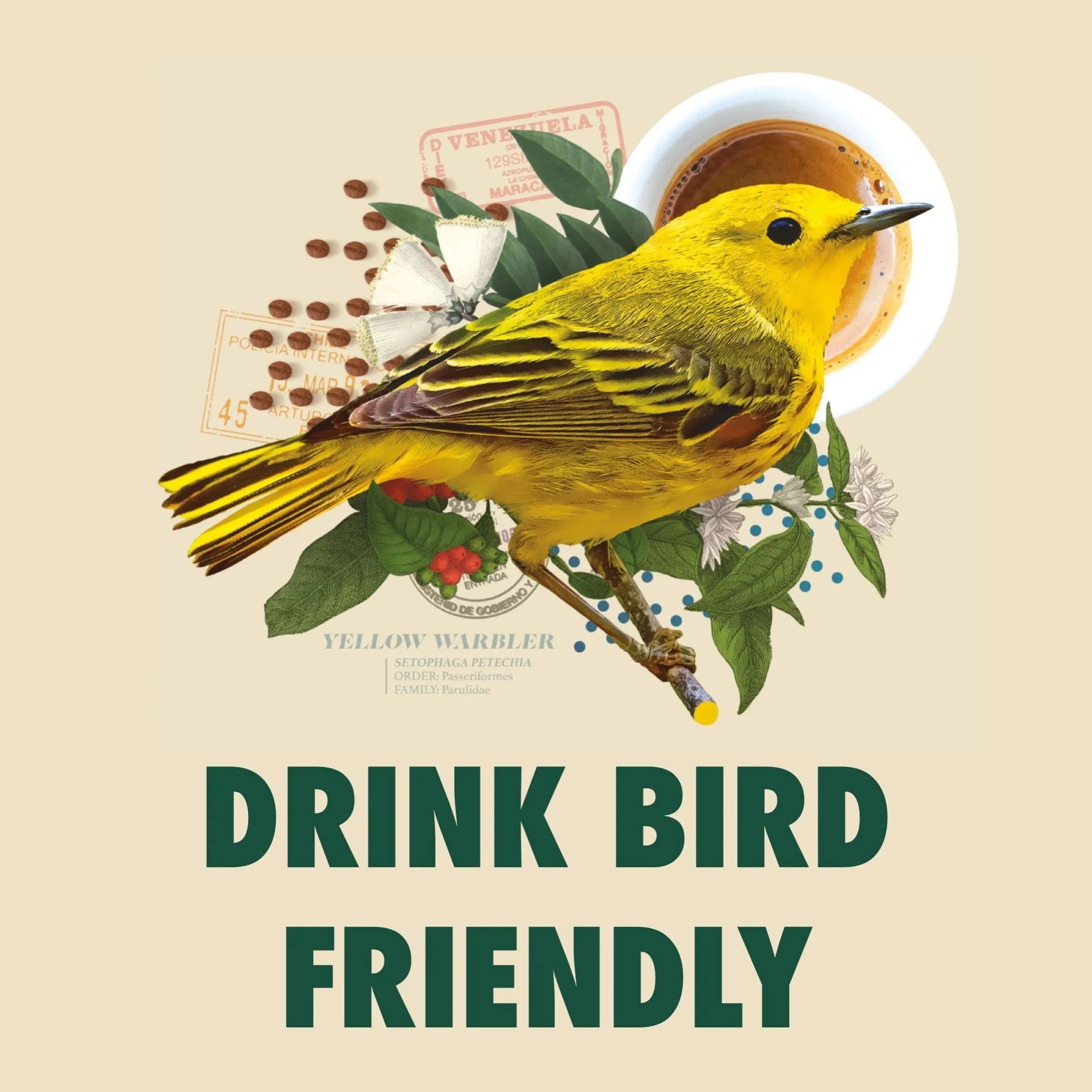
Support wild bird conservation with your purchase of Smithsonian certified Bird Friendly coffee and cocoa products, and Audubon Vermont labeled maple syrup and sugar.
Below are links to source these fortifying and delicious bird friendly comestibles!
I write this as a consumer of these goods who wants others to know about them. None of the companies or organizations on this page pay me to represent the information I share. I provide these leads because I believe in market-driven conservation and the power of our spending habits to drive positive change.
Bird Friendly Coffee
Bird Friendly coffee is widely available online, and the Smithsonian’s Bird Friendly website has a directory for retailers across North America. Retailers both serve Bird Friendly coffee in their coffee shops and might ship to consumers. Other companies are online only. *Check for shipping terms; some may only ship within the US
Birds and Beans has a great subscription program (which I participate in). I get a 2 lb bag every 5 weeks for about $40, shipped to me. I like the Wood Thrush blend, a medium roast.
Big Year Coffee is a small operation run by a bird researcher who sells not only coffee, but Bird Friendly certified chocolate products as well—do all your online shopping in one place!
These are just two of many coffee companies who purposely buy, roast and promote the Bird Friendly coffee growing ethic for both the exceptional flavor profile of shade-grown coffee, and the successful support of biodiversity of this specific growing model.
Bird Friendly Chocolate
Like the above coffee companies, the chocolatiers listed below buy raw product—in this case, cocoa—from Bird Friendly certified growers and producers to create select Bird Friendly certified chocolates. *Check for shipping terms; some may only ship within the US
Seahorse is a favorite of mine, also co-owned by a bird-research-adjacent scientist (see a trend here?), which sells single-origin chocolate bars featuring cocoa from Bird Friendly farms. Seahorse was the first chocolate maker to display the Bird Friendly logo on their label as a baseline branding strategy. And Seahorse now offers a chocolate bar made from both Bird Friendly cocoa and Audubon Bird friendly habitats maple sugar! Double the goodness!
Raaka is the other chocolate maker I purchase most often. Raaka offers a variety of chocolate products containing Bird Friendly cocoa, including single origin infused bars, baking chocolate, and hot chocolate mix. When I give the live presentation about Bird Friendly comestibles, I bring along Raaka as samples!
French Broad and Dandelion also offer single-origin Bird Friendly chocolate bars.
Maple sugar produced in bird friendly habitat
Maple sugar products produced in Bird Friendly Habitat come from Vermont, Maine, New York and Connecticut in the US.
I recommend Couching Lion (the syrup I feature in my live presentation), as a model small maple sugar producer who’s been a part of the Audubon program for years. And as a first time customer if ordering from Couching Lion, you can enjoy a 10 percent discount using the code FORTHEBIRDS10 (all caps).
If you happen by a Wild Bird Unlimited store in the autumn and winter months, you can find Runamok Maple Syrup, another participating maple producer, sold in shop.
Shelburne Farms, Hi Vue Farm and Bridge Road Sugarworks are other participating producers with easy-to-shop websites and consistent inventory.
You can find a more complete list of participating maple producers at Audubon Vermont’s website.
This post was updated 8/03/2026.