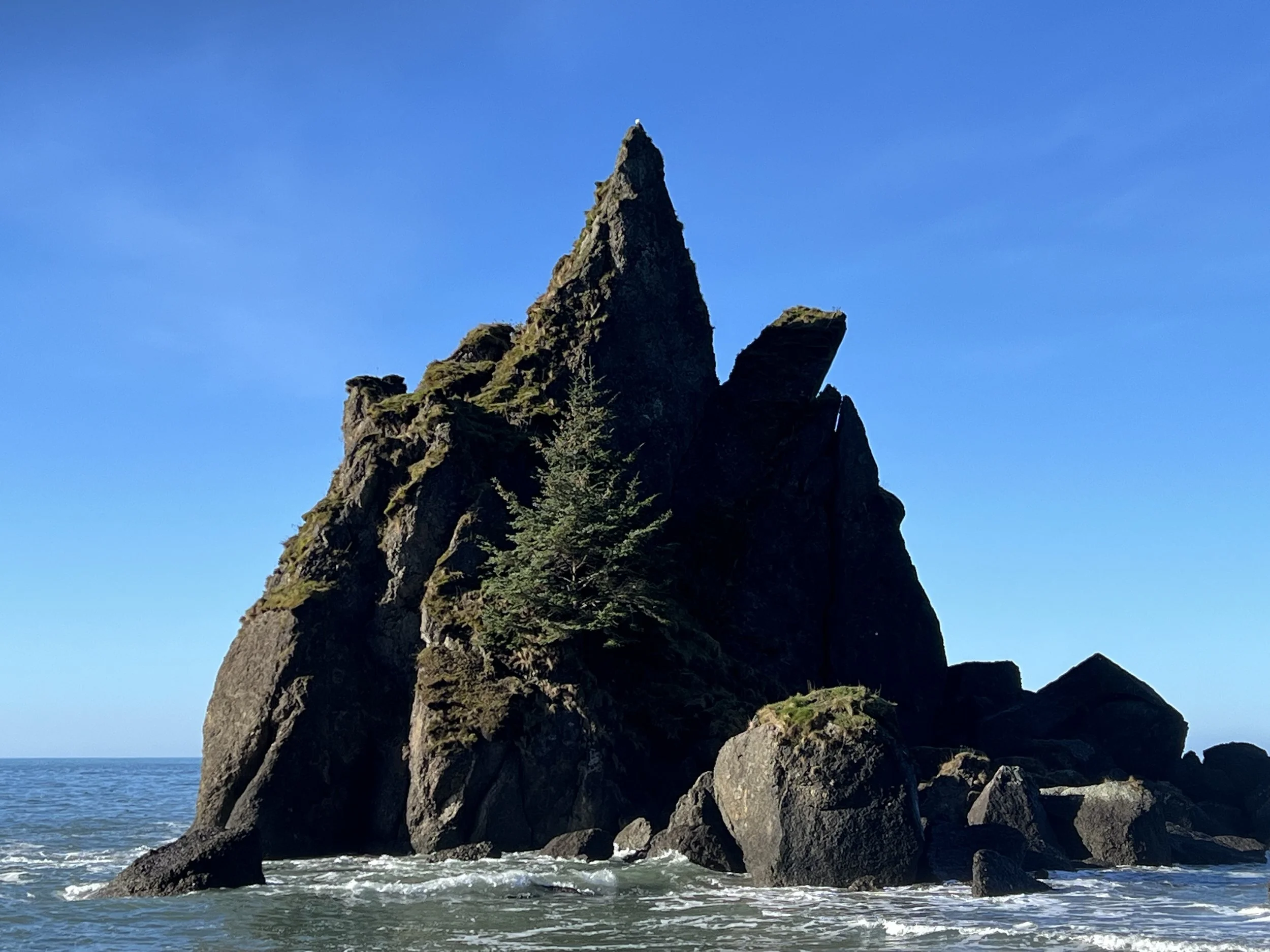
If you look closely at the summit of this castle rock, you’ll see the adult Bald eagle perched there. These birds dominated our visit to the Olympic Coast of Washington one recent weekend, their mercenary vitality on full display as they prompted alarm calls from birds across the range of the wind-buffeted coastal habitat: Steller’s jays scolding from cliff-side conifers and Black oyster catchers screaming from the sea stacks lining the beaches.
Against the blue winter sky of our visit to these beaches, the eagles seemed further amplified in size and menace. And grandeur. Bald eagles are an apex predator in these coastal areas, predating the nesting seabirds on outlying rocks and inhabiting the space with an authority that dominates all other wildlife seen or heard, in my experience of these beaches. They are vigorously alive here.
And so were we, myself and boyfriend Seth, weighed down by backpacks crammed with 3 days supplies for camping in winter temperatures (granted dry, sunny and no wind), hiking into coastal wilderness accessible only on foot. We felt every inch of our middle age vitality and physical capacities scrambling over driftwood logjams crushed against the shore and climbing the wooden ladders linking the beaches by trail across headlands.
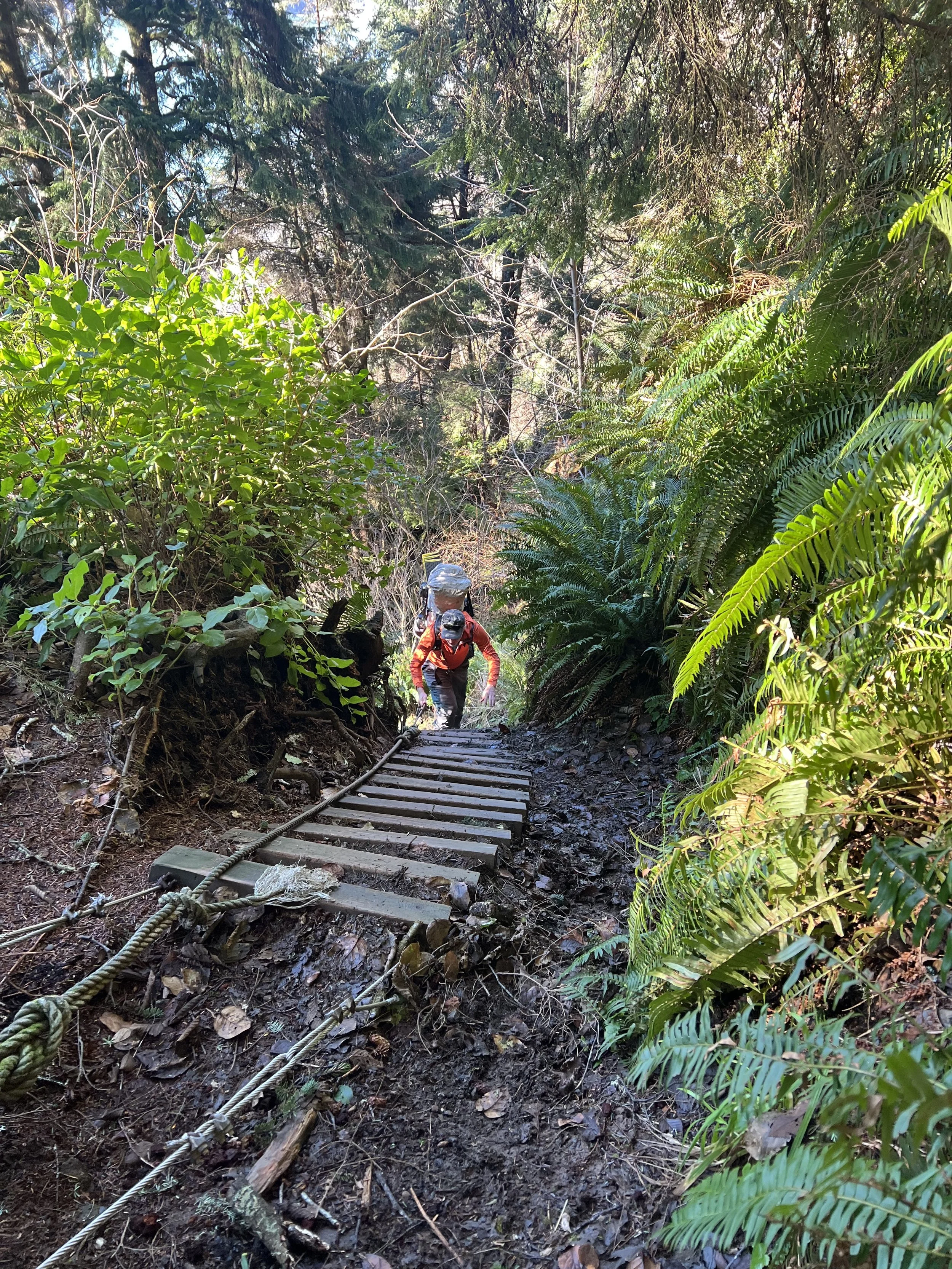
Seth climbing one of several cliff ascents on our 7 mile hike to our intended campsite. January 2026.
The porous tread of sand and crushed rock of beach hiking further wore us out. What looks like a relaxed expanse of beach stroll is instead an exercise in staying afloat as your feet sink into each step from the weight of your pack.
We arrived to our campsite near Toleak Point near dusk, peeled off our packs and felt the weightlessness of shedding many pounds of gear. The lingering sunset and trilling of eagles kept us company until darkness arrived.
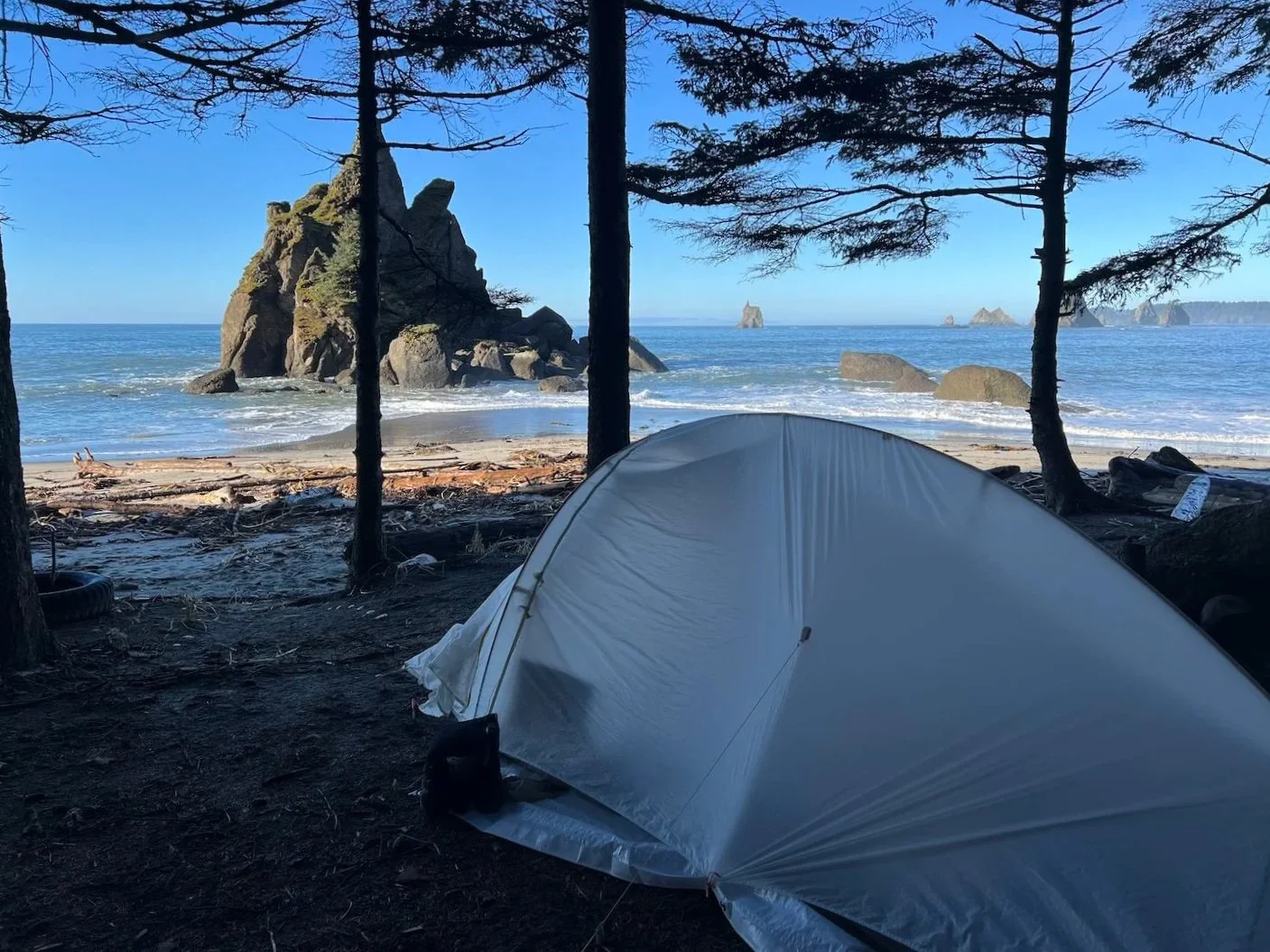
Dawn at our campsite, the second day of our trip, near Toleak Point, Olympic Wilderness, South Coast Route. January 2026.
The next morning we felt our mortality as middle age folks just having slept a night at freezing temperatures on thin sleeping pads. Aching backs and shoulders, frozen fingers; a feeling of greater physical limitations that is becoming increasingly frequent.
What could be discouraging, though, is instead a prompt to live life to the fullest under our own power and existing sensory capacity, before the day comes when we can’t.
While we considered our own slowing trajectory as outdoor adventurers, we also witnessed death. Or rather, the dead already. The coast is a brutal place.
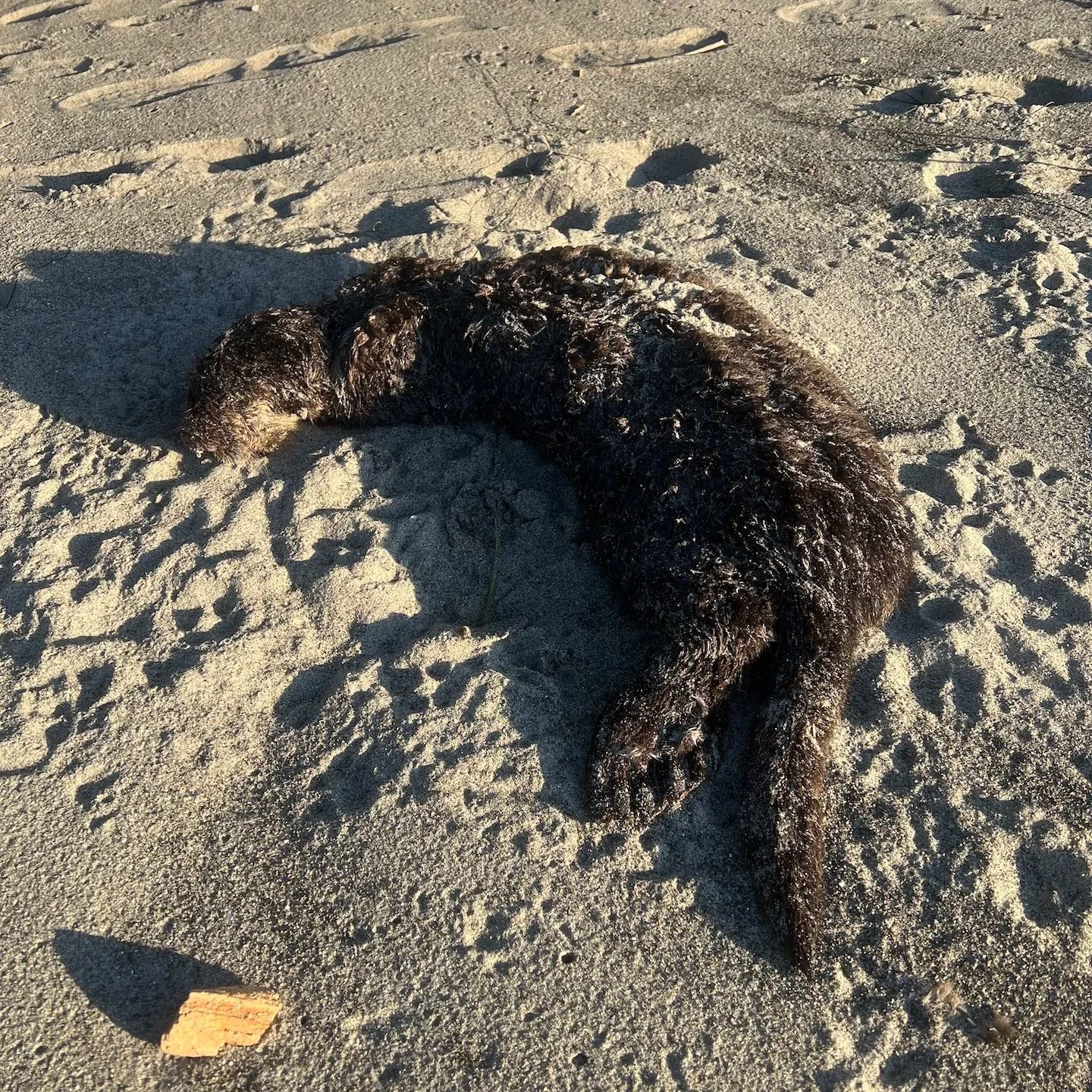
Dead Northern Sea Otter, near Toleak Point, Olympic Coast, WA. January 2026.
Next to our campsite and initially looking like driftwood were the remains of a Northern Sea Otter. I heard Seth call in a plaintive voice to me when he discovered the animal, as I had walked right past it.
Earlier on our hike in, we had discovered the remains of a behemoth California Sea Lion male. Both animals appeared as if resting, neither showing signs of decomposition or trauma aside from what looked like scavenger work on the sea lion’s anus (eyes and other soft cavities are what scavengers like ravens and eagles go for first). I took photos and did not touch either animal.

Dead California Sea lion male, Scott’s Creek, Olympic Coast, WA. January 2026.
At the time of these dead animal sightings we had no cell service. I could not report the animals in the moment so documented what I could of their locations, dimensions and observable details of the cause of death. Then we continued exploring, outside of these reminders of mortality.
We collected water from a mountain drainage meeting the ocean, to filter for cooking. We looked for sea stars on the castle rock (We found a few little ones, I am happy to report. Sea stars in the continental US have declined from wasting disease in recent years). We watched eagles, harbor seals, gulls, and other birds through binoculars.
We watched other life along the beach, too: Other hikers. The binocular view flattened the perspective of these figures approaching or retreating down the long beach, most about a quarter to a half mile away. A quartet of backpackers marched in tandem, looking like robots from a distance. Another solitary figure scurried like a hermit crab, complete with overstuffed pack, extra bag and stick looking like a garbage gripper (we saw this person over two days, appearing to collect trash or flotsam). The landscape absorbed these other humans and they disappeared around a bend on the beach, or into the treeline; we felt a comfortable solitude for most of our stay.
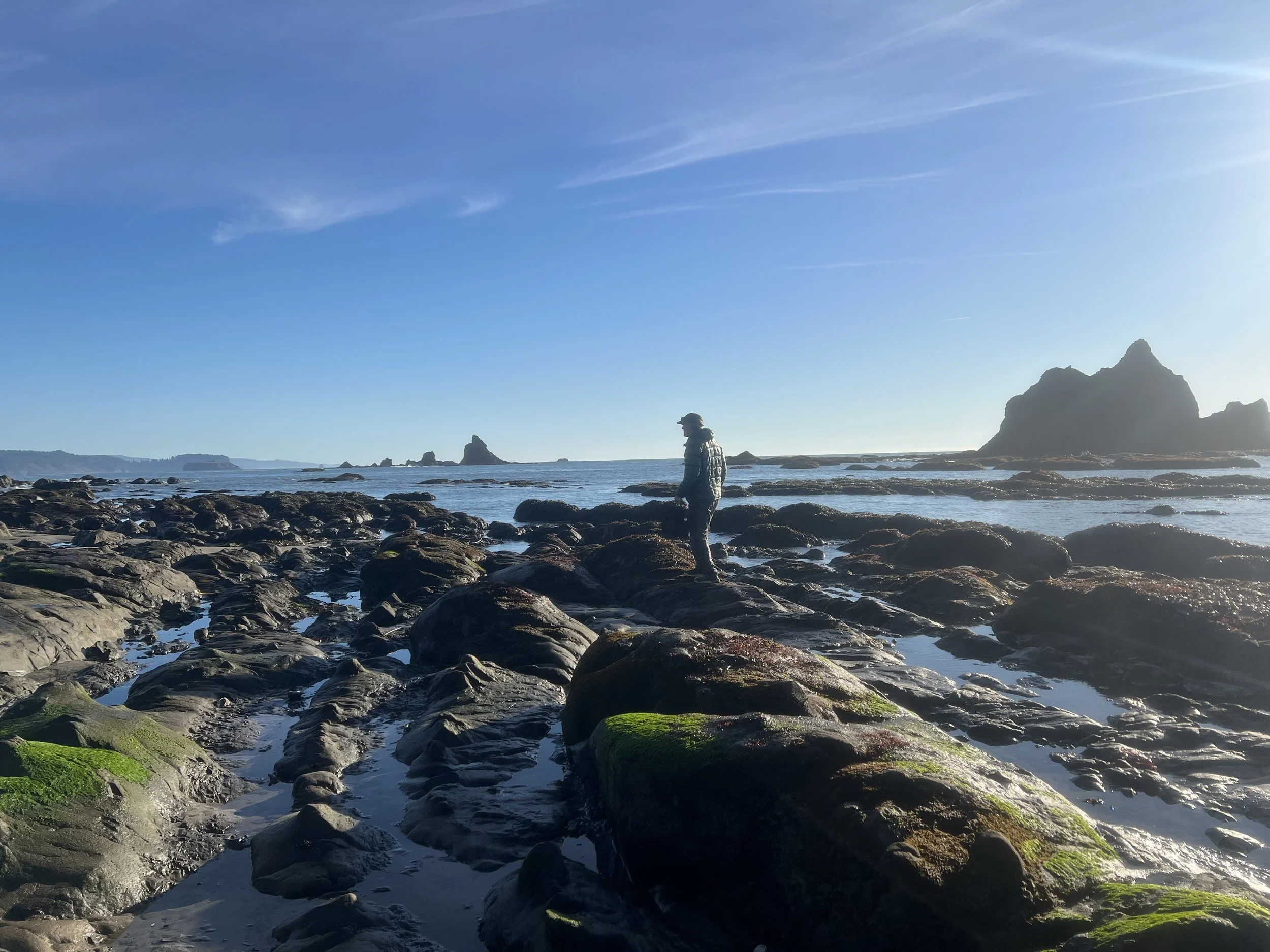
Seth exploring tide pools. Toleak Point, Olympic Coast, WA. January 2026.
After two days and two nights we rose before dawn and hiked out by headlamp to beat the tide at a beach pinch point. As the sun rose, two adult bald eagles alighted a snag over the last stretch of beach we were to hike the final trail out through the woods. We waited for them to take flight again before passing underneath their perch.
Goodbye, coast!
Back home I reported the dead wildlife to Washington State Department of Fish and Wildlife, an agency I work with through my day job. About an hour after my online report submission, I got a call from Alex at the department. She had more questions about the length of the sea otter, to determine if it was an adult or juvenile. We got to chatting and she graciously outlined the reporting matrix for injured, stranded or dead wildlife. I told her about D Bird, for reporting dead birds. Then on a happier note, I shared eBird, for reporting live birds. She took down the information about both resources for what sounded like her own use and interest, and thanked me for telling her about them. I came away from the phone call smiling from the exchange of human warmth and mutual interest, and information that I could share with others (that information is further down in this post), all prompted by death.
Which leads me to offer more instructions for responding to death and its imminence: keep moving. Not away from the truth of death, but towards it. Live life knowing death is coming for you and everyone we know, and it’s permanent. I find freedom in this outlook, and appreciate that all things come to an end. I appreciate the time I still have that much more, and cherish the memories for the life I’ve lived so far. May you have this peace, too, reader.
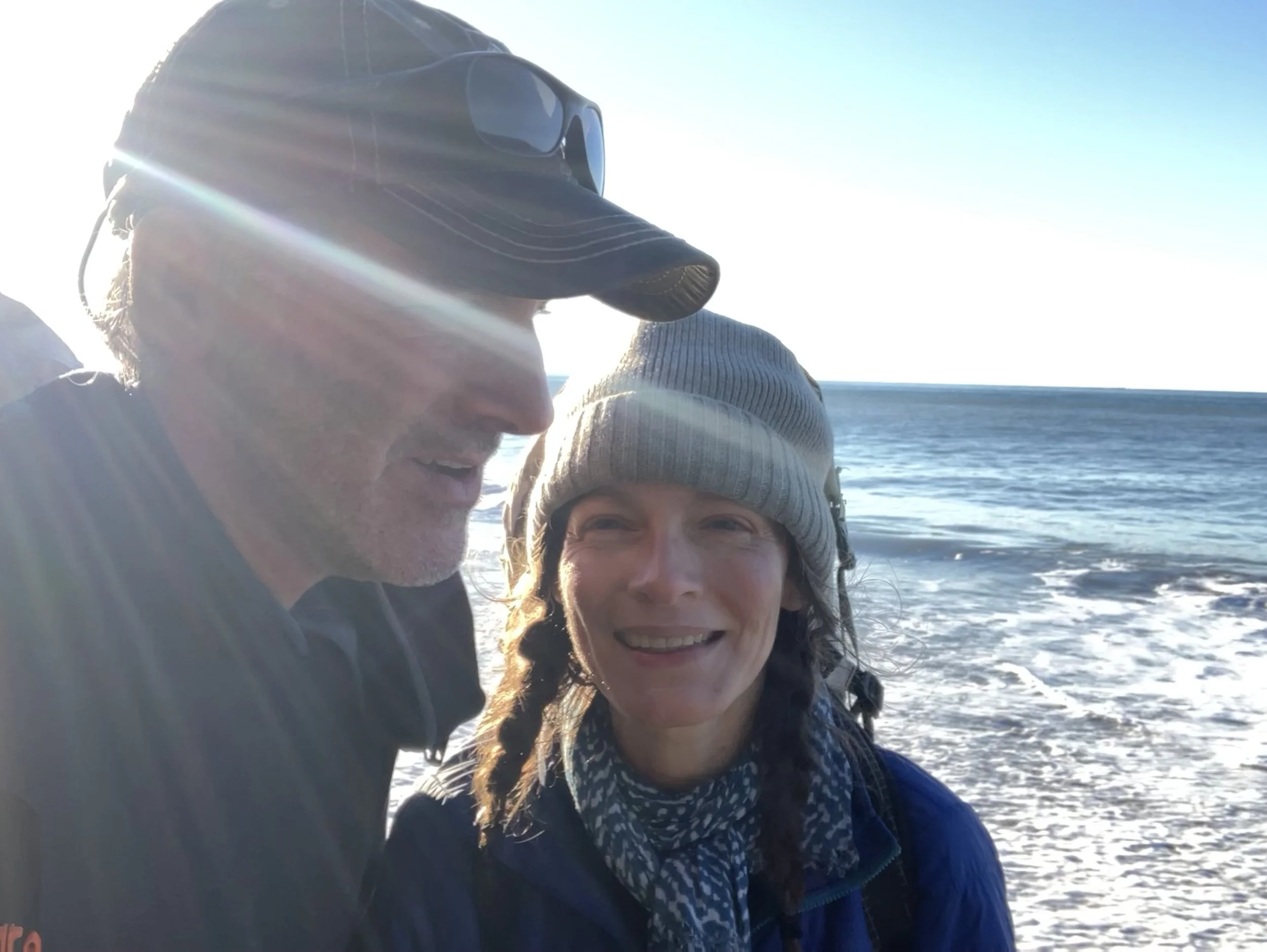
Early morning light on our hike back to the trailhead. Optimistic, yet! Third Beach, Olympic Coast, WA. January 2026.
Thanks for finding me here. I’m dedicating more time to this email send out as my method of communication to this audience in lieu of other places where I have less control for how my content is used.
After trying those other places I have come back here where I have always had the best response from readers who want to hear from me. Thanks again for being here.
Below are the resources mentioned in this story, in order of reporting effort. National will pass the information on to local, and so on down the line to the appropriate agency. What’s important is to document the sighting for history. Thank you to Alex at Washington Department of Fish and Wildlife for this suggested chain of reporting!
Resources for reporting stranded or dead wildlife, including specifics for marine mammals
Granted, under the current US presidential administration, some of this information below might change. Staffing and funding cuts to natural resources management in the US by the current administration has greatly impacted the collection of scientific data for good.
NOAA Marine Mammal Stranding Hotline: call 866.767.6114. This is not a number you can text information to (this number is for the West Coast of the US; other regions will have unique reporting hotlines).
NOAA’s webpage for reporting: https://www.fisheries.noaa.gov/report
US National Parks System: If you are in a US National Park as I was, you can call the respective National Park directly. For a list of sites and current contacts, visit this link: https://www.nps.gov/aboutus/contactinformation.htm
Your respective state’s department of Fish and Wildlife: If you are in a state park or area managed by a state wildlife agency, you can report directly to them. A regional summary list of state wildlife management agencies can be found at https://www.fws.gov/about/regions. If you do not have access to the internet in the moment of reporting, the number to text a report in Washington State is 253.208.2427. I successfully texted follow up information from my online report to this number.