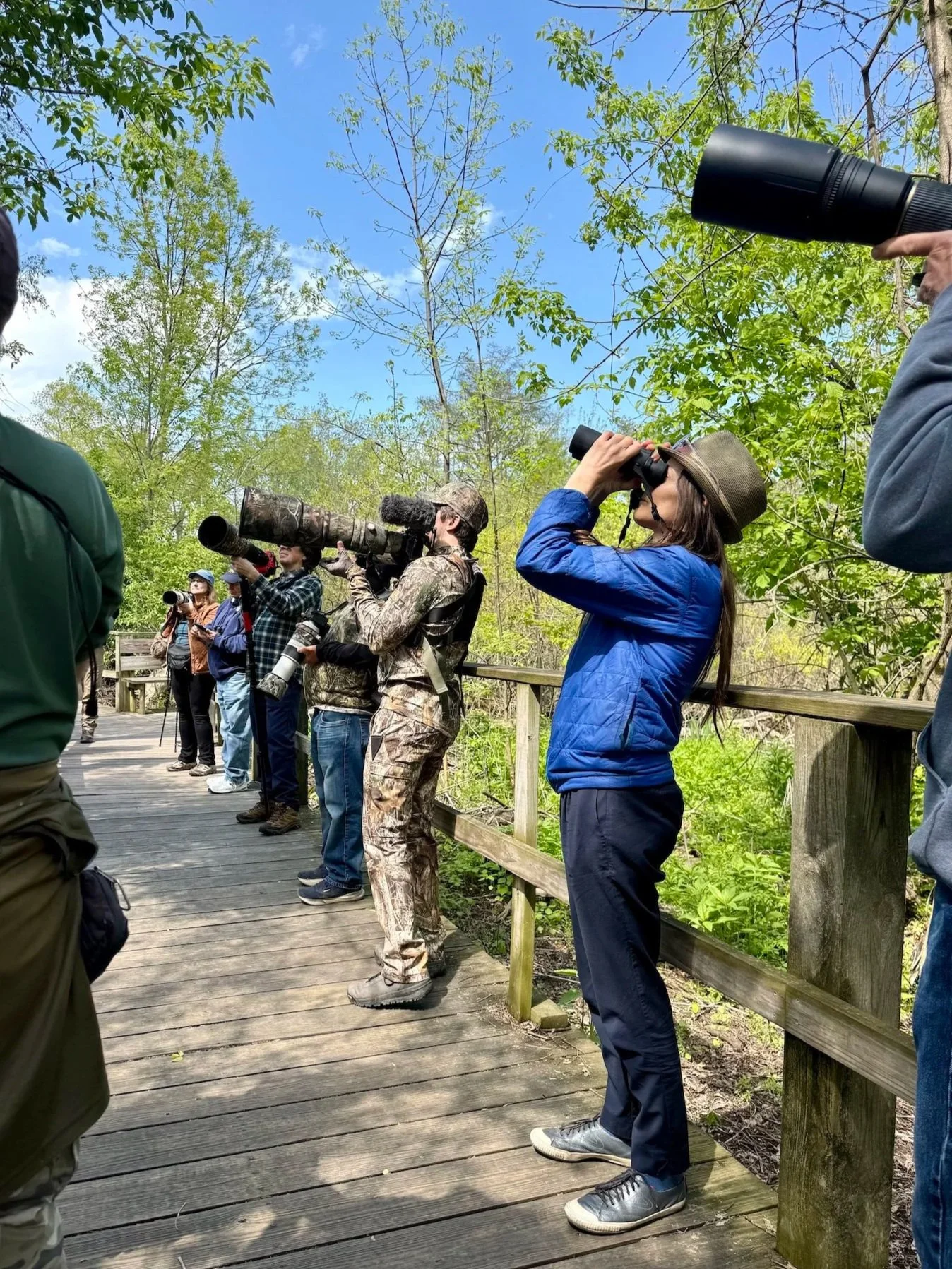
What exactly is “birding culture,” this topic I write about? Birding culture is the people side of a pastime purposefully observing wild birds. It’s the behaviors, habits and social cues exhibited by humans identifying as birders, those participating in observance of those birds.
As a writer, I find the behavior and habits of this interest group endlessly fascinating and have made a career of documenting my observations of the human side of it.
Nowhere else have I seen so many examples of what I call “birding culture,” than at the Biggest Week in American Birding, an annual birding festival hosted by the Black Swamp Bird Observatory (BSBO) in Oak Harbor, Ohio. The Biggest Week lives up to its name, attracting birders from around the Midwest, around the US and around the world. It takes place on a migratory flyway on Lake Erie, across diverse metro and state parks habitats and a national wildlife refuge.
Spear-headed by BSBO Executive Director Kim Kaufmann, one half of the dynamic Kaufmann duo (author and conservationist Kenn Kaufmann is her partner), the event draws famous bird world personalities like writers Julie Zickefoose, Amy Tan, Christian Cooper, and David Lindo, who have presented on topics and led bird walks over the years. In addition to celebrity speakers, The Biggest Week offers 10 days of birding field trips, educational lectures and workshops, a birders marketplace, evening social events, even a bird tattoo contest. The offerings include accessible birding outings and demographic-specific gatherings across the entire duration of the festival.
I was invited to speak this year on the 16th occasion of this huge event (as part of their “Spotlight” series, my topic the visibility of women and our contributions in world birding), and my takeaways as both a guest and participant are many.
My experience of the Biggest Week was driven by my professional associations within this world: I was a paid speaker at the event on a subject I write about, I’ve known many of the organizers and other speakers for years, and my travel expenses for this trip were generously covered by BSBO. That said, I paid my own registration for the talks and outings I wanted to attend, and proceeded as much in anonymous solitude as a regular participant once my professional duties were over. I wanted to experience this trip in two parts of my identity: the birding professional, and the civilian birder. You’re going to get both perspectives.
I arrived to Ohio the day before the Biggest Week in American Birding was set to kick off. I was met by Jessica Vaughn, my friend and the editor of BWD (formerly Bird Watcher’s Digest), at the Columbus airport and off we drove towards the festival. She had magazines to deliver to the Maumee Bay Lodge and Conference Center where the festival registration, lectures, social events and Birders Marketplace were to take place. BWD had a booth at the marketplace and was a sponsor of the event. Jessica is an Ohioan and has attended the festival either as a professional or civilian birder nearly every year of its existence. We were a couple of birder industry folks speeding up the highway, a backseat full of boxes of birding magazines and optics, talking birding media intel the whole way.
Jessica oriented me to the geographical expanse of the festival, how reliant on a car I would be (she delivered me to the car rental agency for my own wheels, in fact), and the places and experiences not to miss. One of those places was the Magee Marsh Boardwalk, which is the best known birding spot of the whole festival: a one mile long stretch of boardwalk meandering through Eastern Cottonwoods and wetlands, where every May, migrating songbirds forage at eye level like live jewels close enough to touch.
I said, Yes, let’s do it! Let’s hit the most iconic spot of the whole destination birding experience. Nothing like diving in feet first upon arrival.
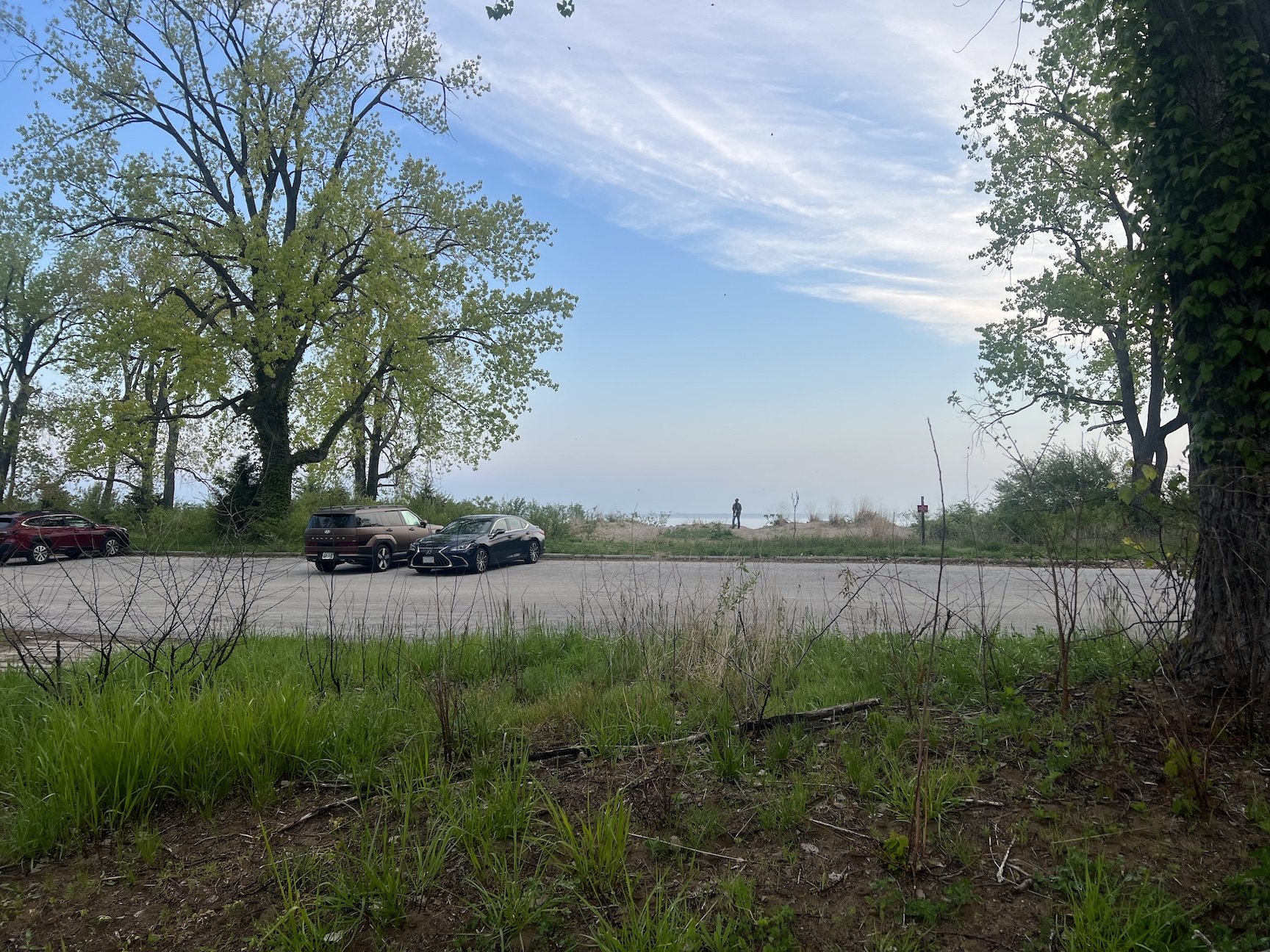
A quiet moment at the Magee Marsh parking lot on the shore of Lake Erie, a lone birder on the lakefront, silhouetted against the morning sky. May 2026.
Right away I understood how Magee Marsh is different from any place I have ever set foot as a birder. The setting itself is standard for birders accustomed to coastal wetland birding amid willow and cottonwood and along levies lined by cattails. Productive birding habitat with ideally a good volume and variety of birds.
This time it wasn’t the number of birds but the number of birders in one place that blew my mind. It was like entering a music festival, though no thumping base at this rave, just lots birdsong from the treetops. I could feel the intensity of the gathered crowds, the building excitement for what was to come. I was there for the same reasons as everyone else, a zeal for observing wild birds. There is nothing like the shared experience of the similarly obsessed, en masse. And in near silence. Birders are intentionally quiet.
The parking area, while expansive, is surrounded by trees, which softened the visual contrast of so many cars. The quiet of walking through the parking area was further softened by the sound of the breeze in the canopy above, and the trill of yellow warblers.
Birders’ cars are not unlike other outdoor enthusiast rigs—lots of Subarus, Toyotas, Westfalias, Sprinter vans, electric vehicles—with distinctly birdie bumper stickers. This being the Midwest, cars displayed stickers from every bird observatory, bird alliance or Audubon east of the Rockies. I observed license plates from every Midwestern state from Michigan to Kentucky and as far away as Florida. And bird-themed vanity plates.
Even before reaching the boardwalk, birders were birding. Evidence of birders already having walked the boardwalk and taking a break before going back were everywhere too: I tried to sneak photos of multiple tailgating parties. Those birders having birded all morning with no intention of leaving Magee Marsh until dark, now breaking for refreshment.
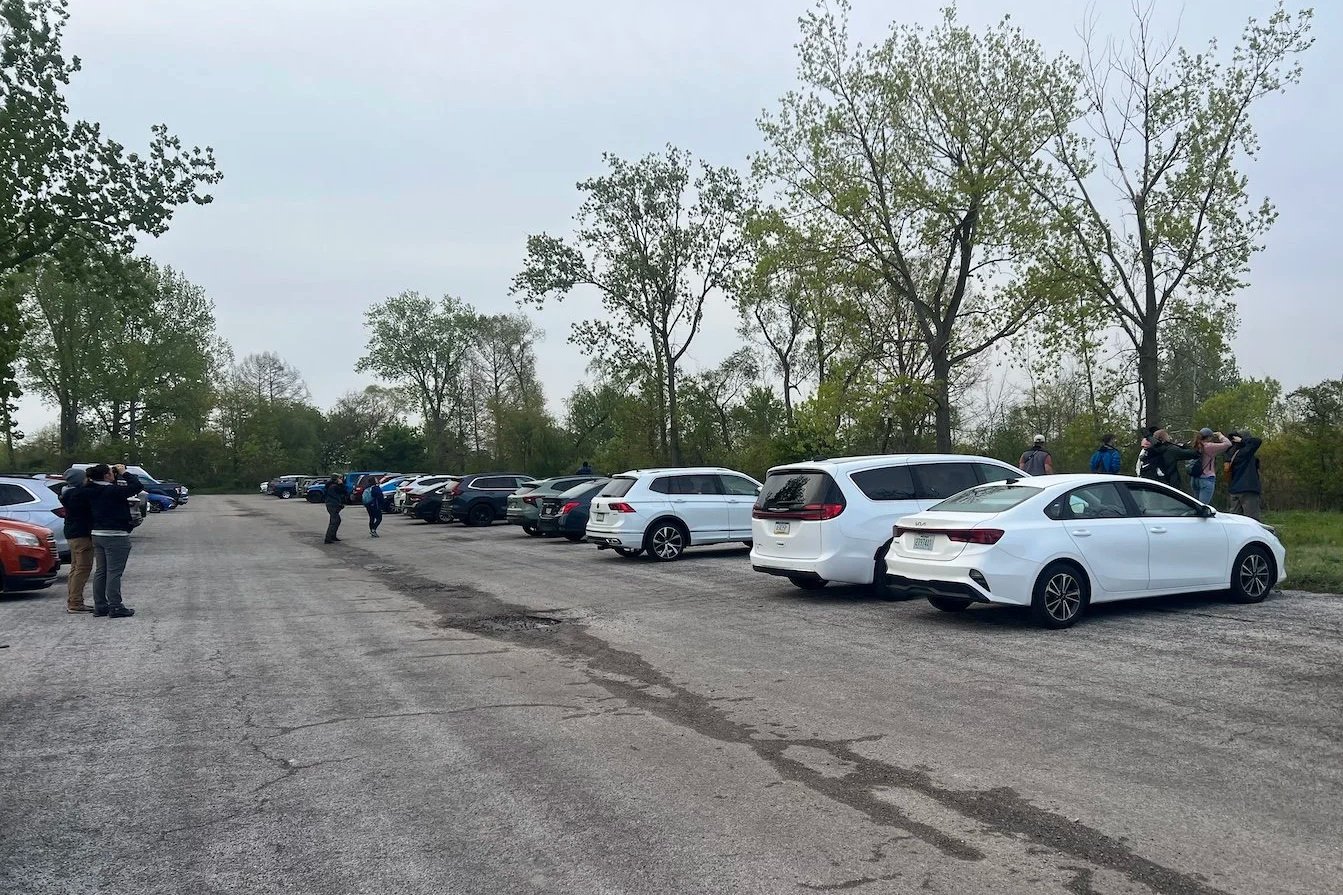
The absolute hurry of birders to start birding the minute they exit their cars. Magee Marsh. May 2026.
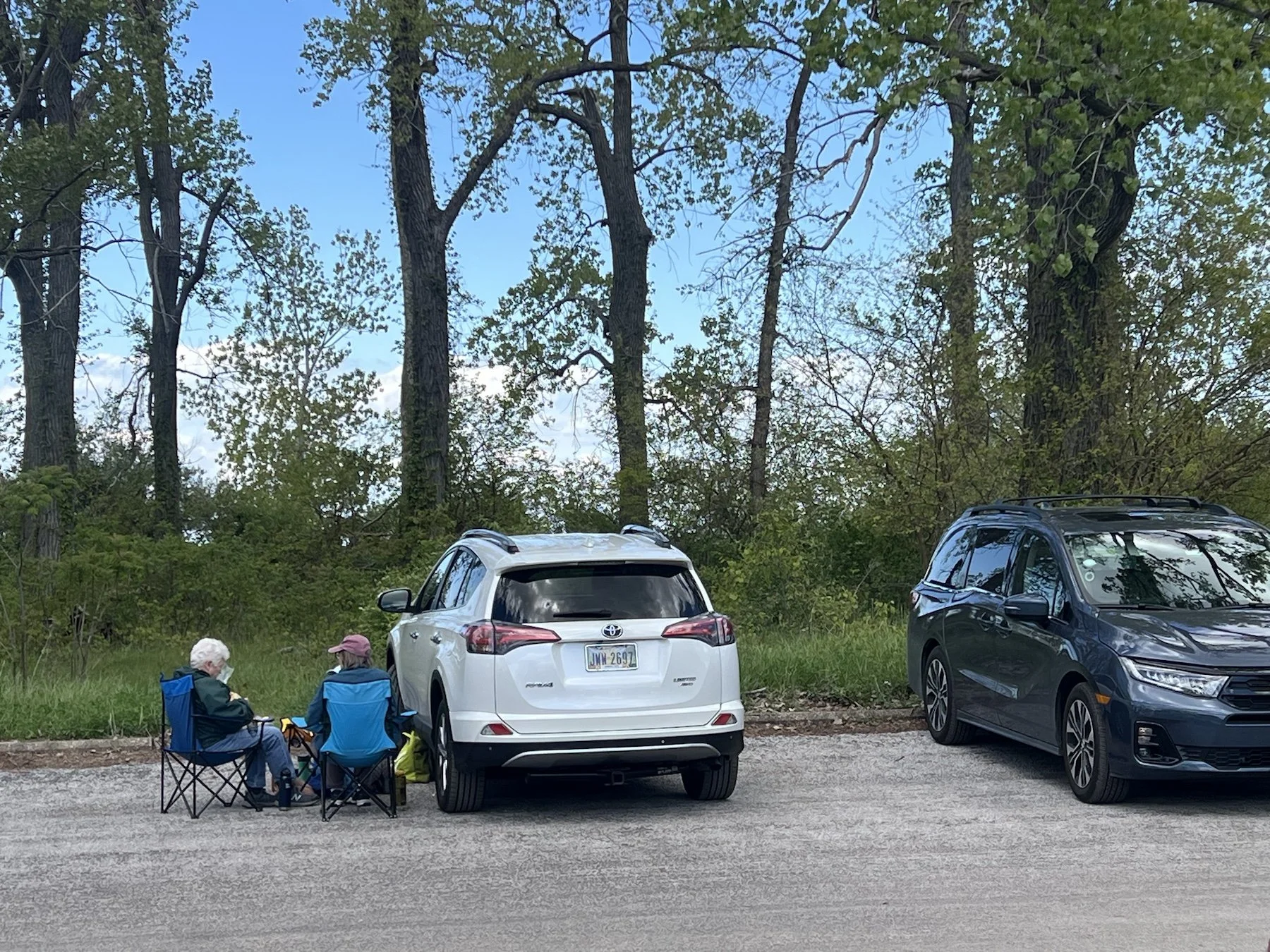
Ladies tailgate lunch, Magee Marsh parking lot. Birders bird from daybreak to dark here. May 2026.
At last Jessica and I made it to the boardwalk, which is not unlike making it to the main stage of the music festival after meandering in a heart-thumping daze through throngs of partiers (though again, much quieter!). We crept through the birder bottlenecks, eavesdropping to hear what people were watching, and occasionally asking, too. Jessica is a confident Ohio birder and pointed out the multiple warblers in sight: Blackburnian, Yellow-rumped, and Palm warblers to start.
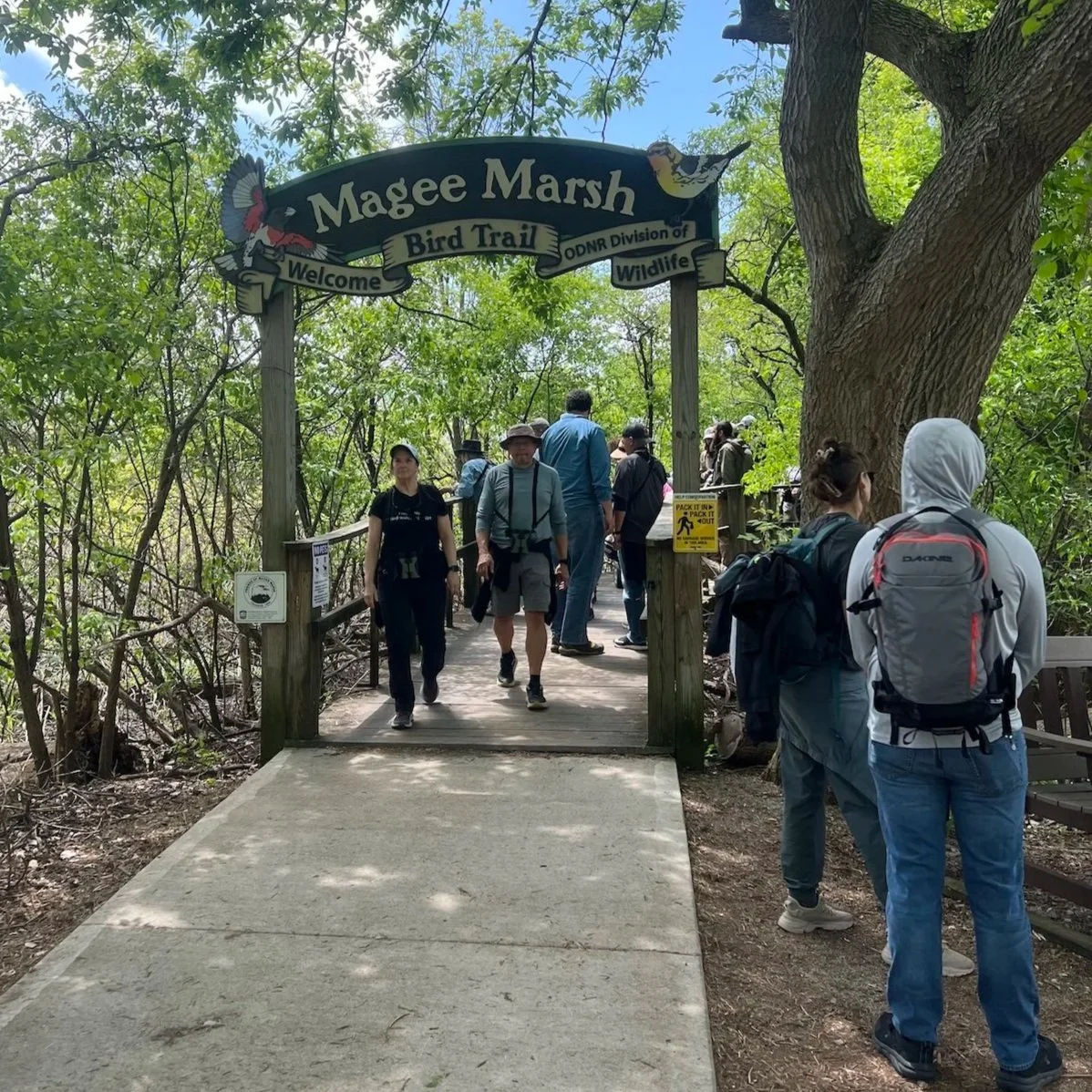
One of the two entrances to the Magee Marsh boardwalk, each with a cheerful arch sign like this. May 2026.
We caught note of a roosting Eastern Whip-poor-will and were guided by another birder to its whereabouts. The bird sat sleeping on a log not 15 feet off the boardwalk, within view (if you could make out its camouflage amid the leaf litter and bark) of hundreds of passersby. Moments later we saw a Yellow-throated Vireo, another new bird to my eyes. That may indeed be the bird I am looking at in the leading photo of this post.
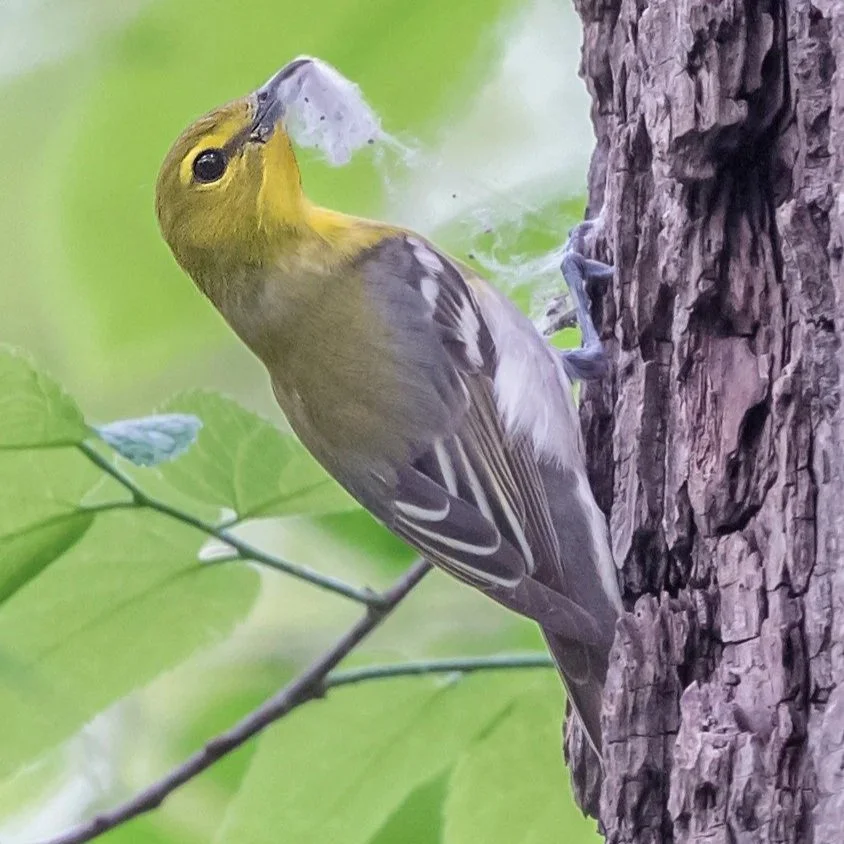
Yellow-throated Vireo. Photo by Jamie Cunningham, Sabrewing Nature Tours.
Jessica’s last tip for my festival experience was not to miss Blackberry Corners Tavern, which she pointed out as we raced past it on our way to my hotel. Home of the “Lifer Pie” tradition, Blackberry Corners welcomes birders wanting to congratulate themselves on new birds seen (a “lifer”). I would return there to try that pie the next day. Jessica and I said our goodbyes as I retreated to my hotel and she returned home to Columbus.
Friday was my speaking day and it passed quickly as I hurried up and waited, standing around nervously at the Maumee Lodge and Conference Center until my lecture. I needed lots of downtime until it was time for me to turn on.
As folks gathered in the room where I was to give my talk, I struck up a conversation with a woman new to birding who is also blind. She and her friend were visiting the festival for the first time like I was, and we all remarked how impressed we were with its organization. As we talked I made a mental note to describe the visuals of every slide as I later talked, and to add alt text to visuals in my blog posts forever after, too.
Kenn Kaufmann attended my talk, as well. Kenn is a long-time supporter of my writing, and more recently, my speaking. Early on when I shared my ambition to speak more, he pointed out how helpful speaking is for generating further writing ideas. Audiences prompt ideas we might not generate on our own, and add a dynamic energy to our work in progress, or even work we think is “done.” I have carried this advice from Kenn in my presenting work, often revising a presentation after an occasion of giving it, from the quality of the audience input, to make it better.
The audience for my presentation, “Birding For Her: A Decade of Observation of Women’s Visibility in the World Birding Scene” was no less attentive, kind, and supportive. “When are you going to write a book?” asked one. I demurred that my sweet spot is the 2000 word essay, and another audience member interjected, “That’s what chapters are for!” Everyone laughed.
After the talk I wandered down the hall to the Ball Room to hear author and podcaster Laura Erickson speak about 50 years of being a birder. Kenn introduced me to his wife Kim, the Executive Director of BSBO and the spokesperson of the Biggest Week event, as both were there to see Laura speak, too. Kim and Kenn are a noticeable visible presence at the event while also existing in the world as titans in the birding community. Titans are also humans, and Kenn and Kim are especially personable and welcoming ones.
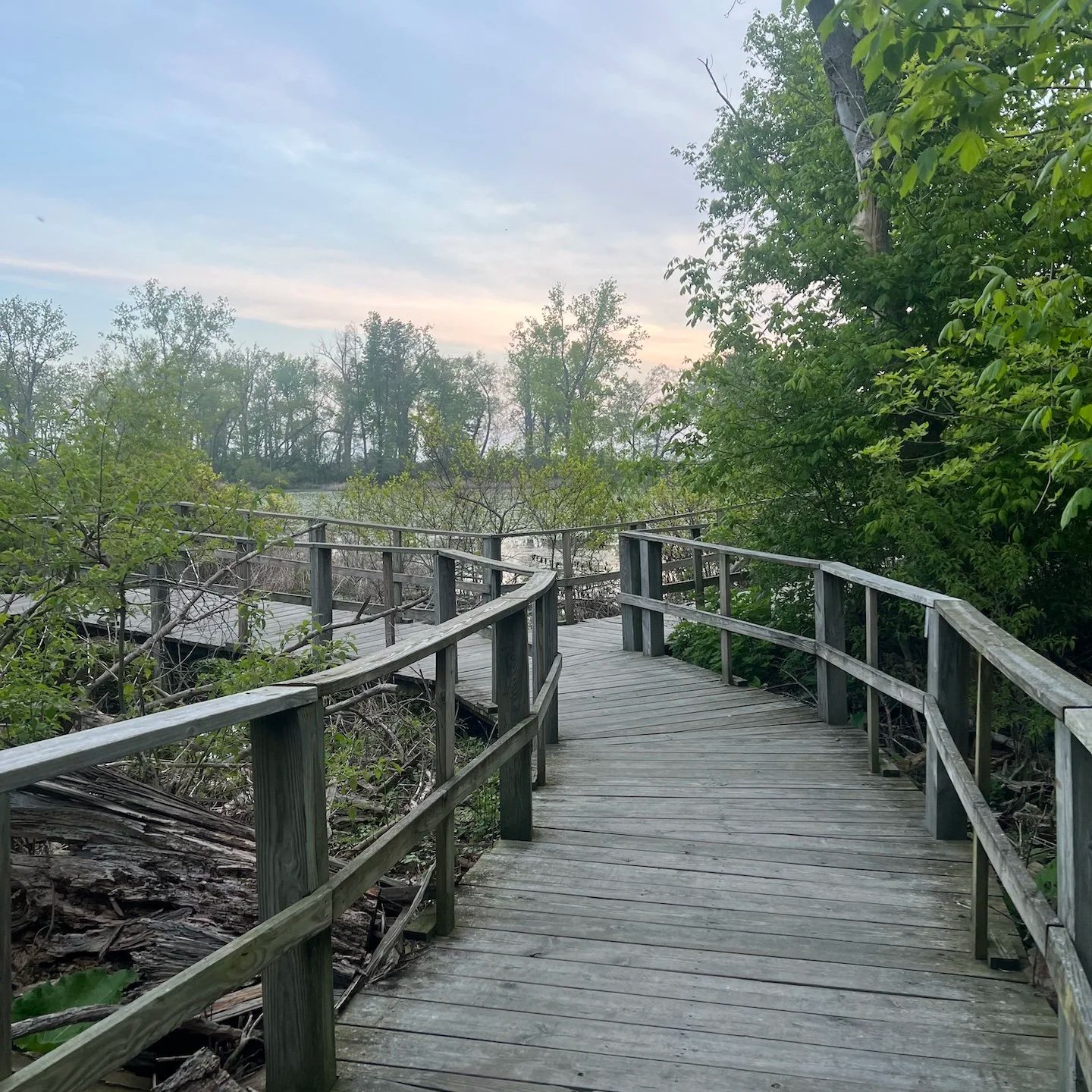
The Magee Marsh boardwalk, blissfully quiet at 6:40am. May 2026.
It was an early night for me after Laura Erickson’s lecture, and Saturday morning marked my first official day as a civilian birder at the Biggest Week. I rose at 5am and left before light for Magee Marsh again, arriving by 6:20. As I drove the long road over the dike through the marsh, I saw a group of black-clad figures gathered alongside the road. They were far from any parking pull out and noticeably uniform in their dress. In the pink light of dawn as I passed them I saw they were a group of Amish, birding.
Jessica had shared that the Amish of Ohio are keen birders, and she has considered how to market BWD to them as readers. I saw more Amish on the boardwalk later that morning, and hovered near them to snap a picture. As you can see from the photo below, I think I was busted.
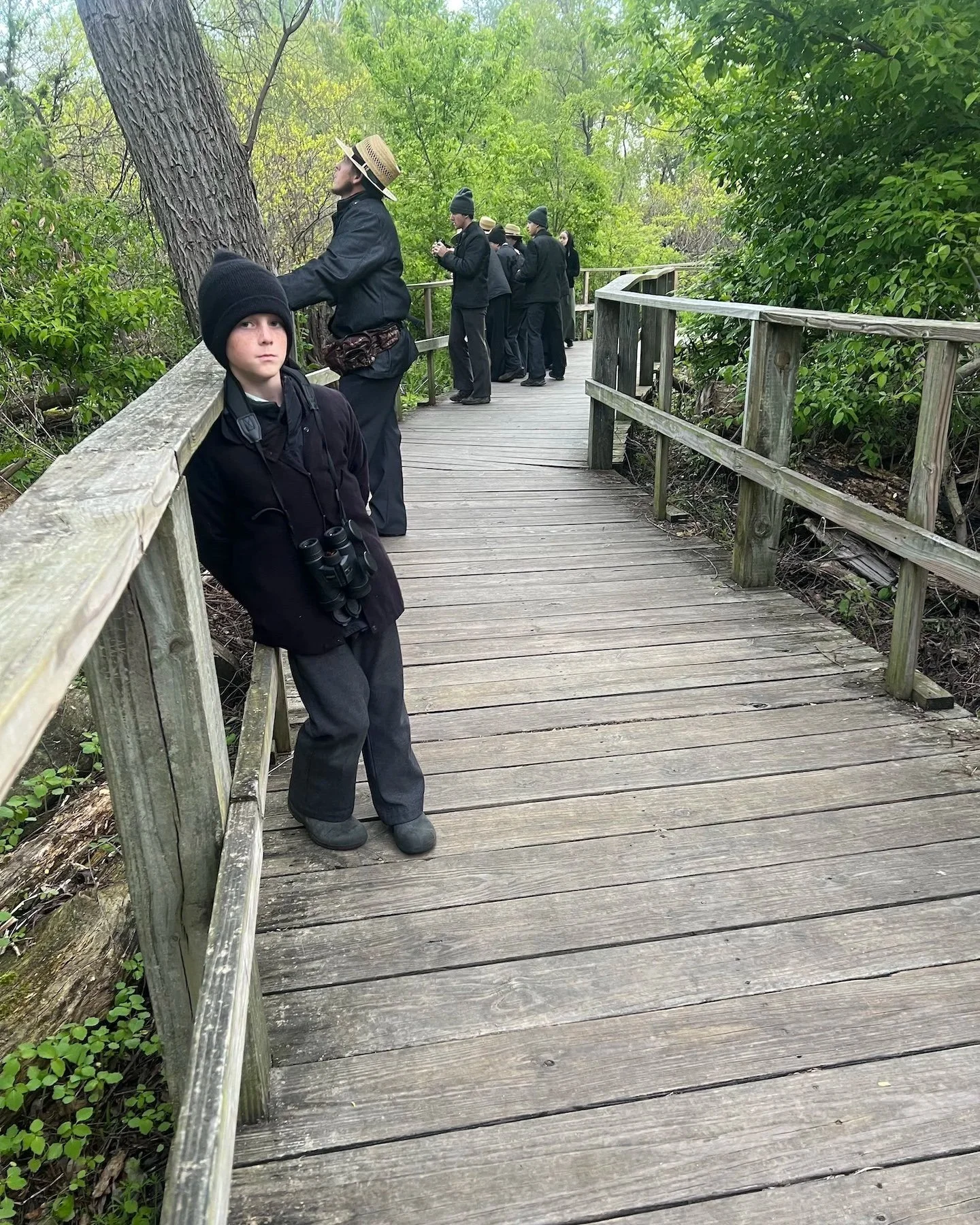
The Amish in Ohio are avid birders, and come out in groups to the festival every year. This boy has my number as I pretended to do stuff on my phone while covertly taking his photo. That is his family group behind him. Magee Marsh Boardwalk. May 2026.
That Saturday also marked World Migratory Bird Day, and out in the parking lot of Magee Marsh presided Tom Bartlett, doing his 31st Big Sit for this international counting day (and his 16th for the Biggest Week, which always coincides).
Tom sits most of the day on an elevated steel hunting stand, counting every bird seen and heard, whether perched nearby or flying overhead of that exact spot (within defined parameters). Drinking coffee and holding court he fosters a convivial vibe around the count, with the help from assistants and passersby.
As I stood and participated in the effort for a few minutes, I could not discern who was an official assistant and who was like me, a curious newbie feeling instantly a part of something cool. From kids to BSBO staff to retirees to bros in baseball caps, everyone seemed to be into it. Concurrent to the hushed crowds on the boardwalk, the big sit was like gossiping at the town diner—jokey, alert, vocal, with coffee!
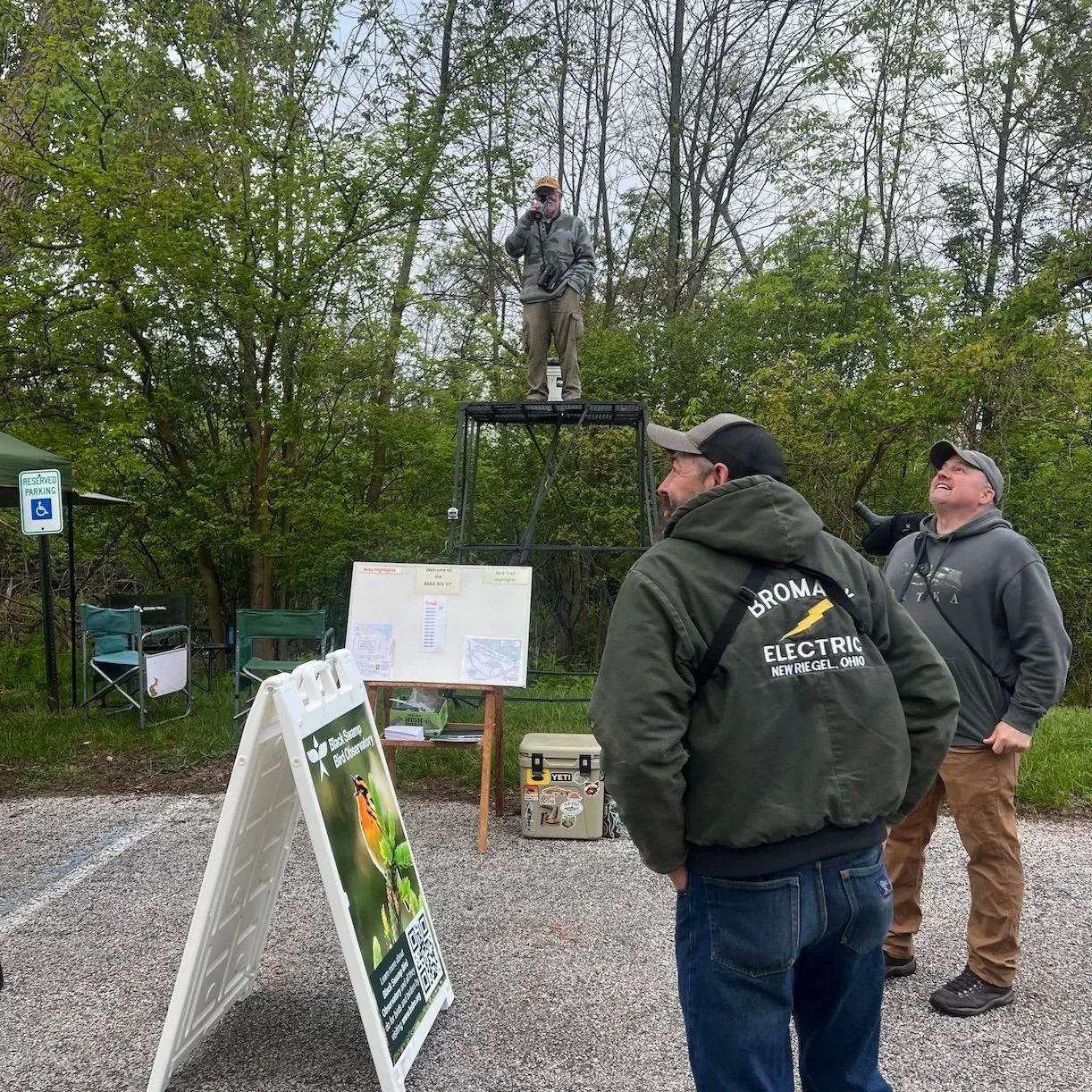
The Dude presides! Tom Bartlett doing his Big Sit on May 9, 2026 (the year’s World Migratory Bird Day and Day 2 of the 2026 Biggest Week in American Birding), to raise money for the BSBO youth education programs. For the 31st year in a row, he sits atop a steep hunting stand and counts birds from 5am to 5pm (with the help of some assistants and enthusiastic passersby). Photo taken around 7:20am, he is only a couple of hours in, fortifying with that thermos of coffee. May 2026.
I had begun that morning with the boardwalk relatively to myself, but birders are an early rising crowd, and I knew that solitude wouldn’t last long. For one moment it was me and a sextet of American White Pelicans flying over head just above the treetops, their wings moving as if in slow motion and their bodies in line. Large birds in numbers flying overhead is a glorious sight, like fast-moving clouds on a sunny day, I grasped at the natural ephemera I witnessed of their flight over my head. And then the birds were gone, out of sight.
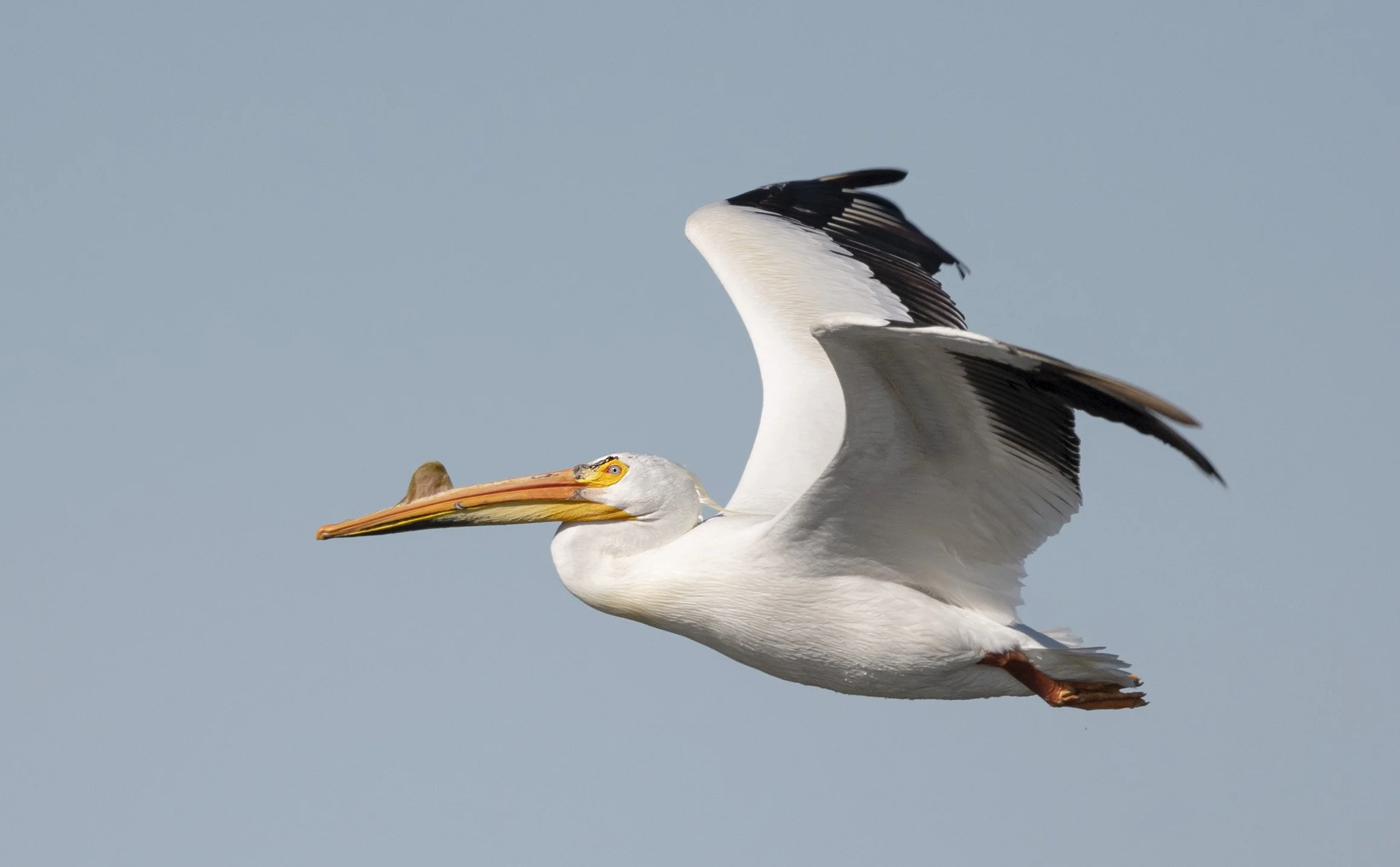
American White Pelican in flight. Photo by Jamie Cunningham, Sabrewing Nature Tours.
Saturday’s early morning solo birding was now coming to an end. It was only 7:30am but already I had another place to be, and I departed Magee Marsh for the moment. Driving out of the park I met with lines of arriving birders in an unending flotilla of cars. Early morning risers representing, birders gotta bird!
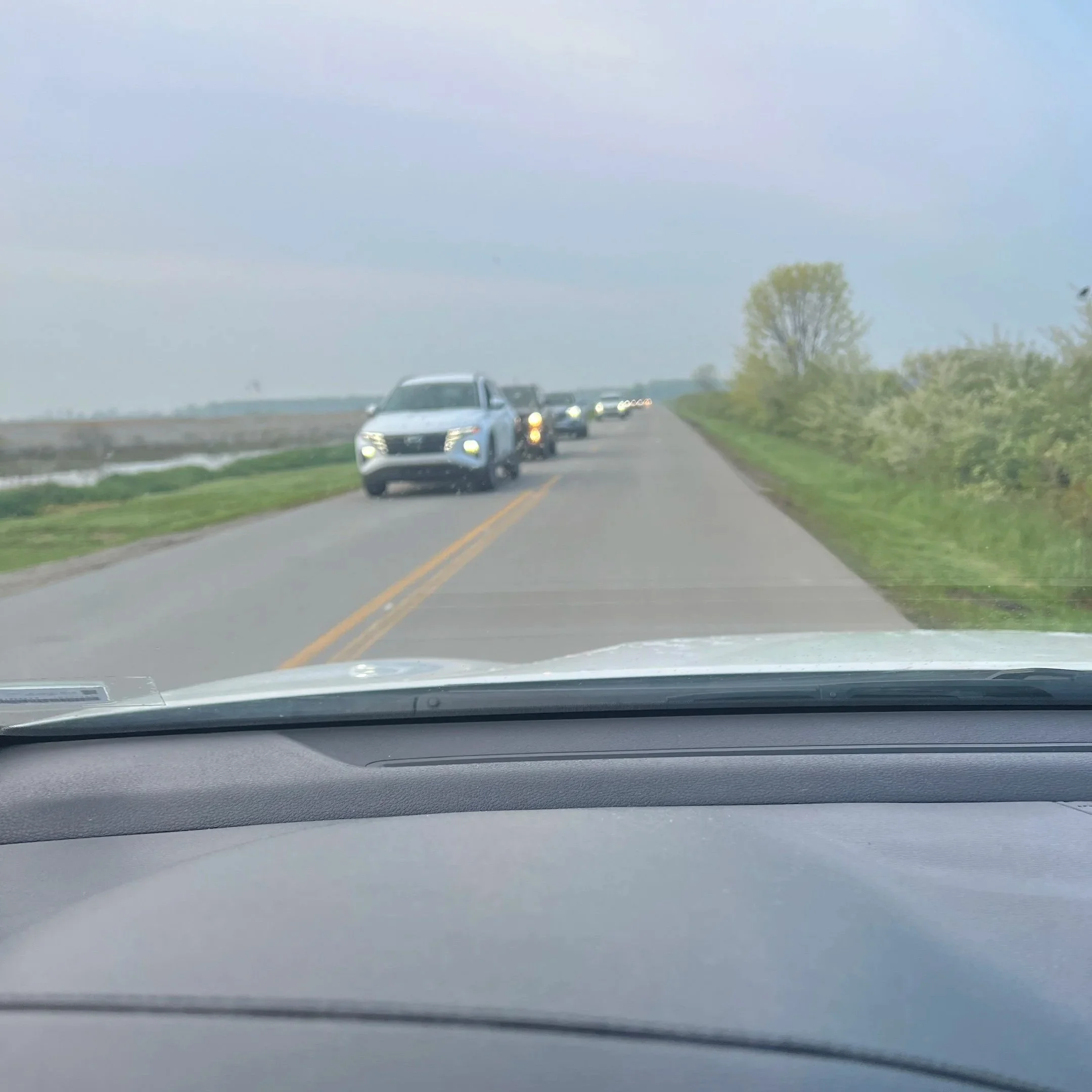
Birders arriving to Magee Marsh around 7:30am. I was leaving, having arrived at 6am! Look at all those cars! May 2026.
Next up that morning at 8am was a Keynote Walk with Laura Erickson, at Maumee Bay State Park. Keynote walks with celebrity birders are one of the Biggest Week’s biggest draws. The walks are limited to a group of about 30 and last two hours. They are a more casual birding experience, meant to be conversational and humanizing for all participating. Laura is a natural in-person story teller from years of hosting her podcast, “For the Birds.” She and her co-leader Erik Bruhnke kept us moving and laughing and counting birds while they trading off sharing field mark tips for identifying birds in the field. Laura has a penchant for walking backwards as she narrates a topic, and I kept wanting to grab her arm for care. She’s a pro and knows her way of doing things and it’s important to her to look at her audience as she talks, something I appreciate as a method for unifying a group as demonstrated by the person leading.
The other element I appreciated of this walk was Laura’s co-leader Erik Bruhnke’s sense of humor in identification. “Yup, that’s a gull!” he affirmed cheerfully of birds in flight too far away and backlit to definitively identify. You can tell the energy of this walk in this photo of everyone laughing.
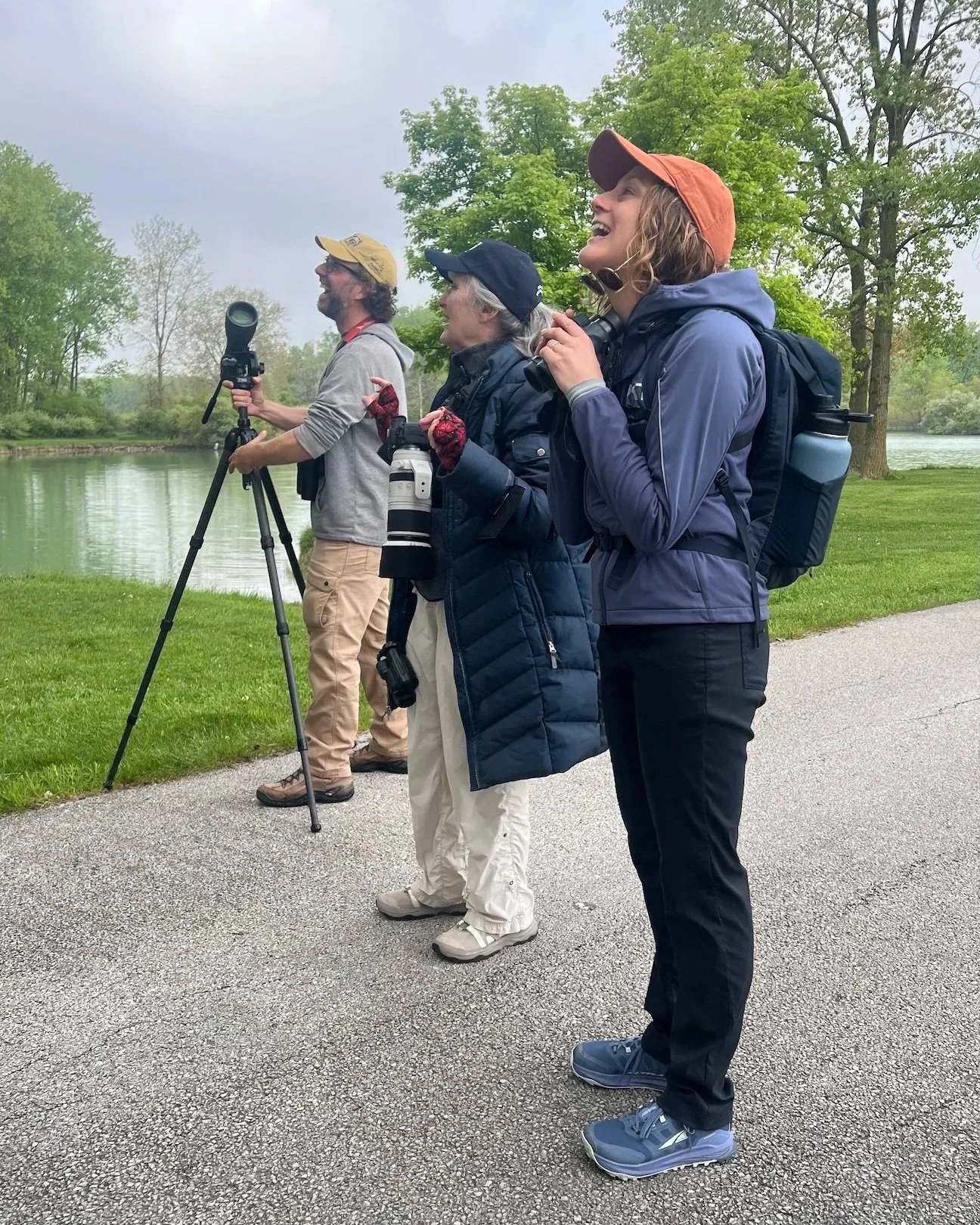
Three birders having a laugh! Erik Bruhnke, Laura Erickson, and Blaise from Portland, OR, during Laura’s Keynote morning bird walk. May 2026.
The remainder of my day was spent birding alone again at Magee Marsh, though I ran into colleague Mindy Withrow, the Chair of the BSBO Board and one of the organizers of the event. To run into someone I recognize on the crowded boardwalk of Magee Marsh is like recognizing a friend on the streets of New York City. I may be happy to be alone among thousands of other humans, but I still welcome a familiar face, and of all places, somewhere not my home turf.
After chatting with Mindy, I walked a 4-mile path around the estuary, and got away from the crowds into total quiet. Northern Yellow Warblers serenaded the entire walk from the hedgerows and tens of Tree Swallows zipped through the sky overhead. The most memorable birds of this afternoon walk were the Trumpeter Swans with amber-tinted plumage on their necks. I hesitated to identify them for that amber tint. They looked like Trumpeter Swans! I have those birds in my back yard back home in Washington every winter! Sure enough, I later learned from Jamie Cunningham the swan’s amber plumage discoloration is a result of their ingesting minerals (iron?) in the waters of the estuary. Lake Erie is surrounded by industry.

Blackberry Corners Tavern participates in a local pro-birding (and birders) business initiative managed by BSBO to promote local business to the birding public. May 2026.
The day ended with Lifer Pie at Blackberry Corners Tavern. The wait staff knew exactly what I was there for. This birding week is so ingrained in the local community that you see signs for it everywhere: the digital “Biggest Week” logo and dates glimmering from a bank sign along the country road leading to Maumee Bay State park; the “Welcome, Birders,” banners hanging from light poles in the town of Oregon where my hotel was located; the hotel lobby itself with information about the festival and bird word search puzzles on the reception counter.
BSBO has made a place in the culture of this area, not just for birders but for all those watching and benefitting from birders and the money we spend when we visit a place for birds. Many of the businesses sporting welcome signage participate in the BSBO’s Black Swamp Birds and Business Alliance, aligning local hospitality in the ways of birders and how to attract their business.
Sitting in the noisy tavern, I enjoyed a slice of Blackberry crumble-top pie with whipped cream on top, and a coffee. I dedicate that slice of pie to the Yellow-throated Vireo, the first lifer of the visit. I added 8 more lifers over the course of my festival stay, but did not return to Blackberry Corners for more pie. One slice was enough!
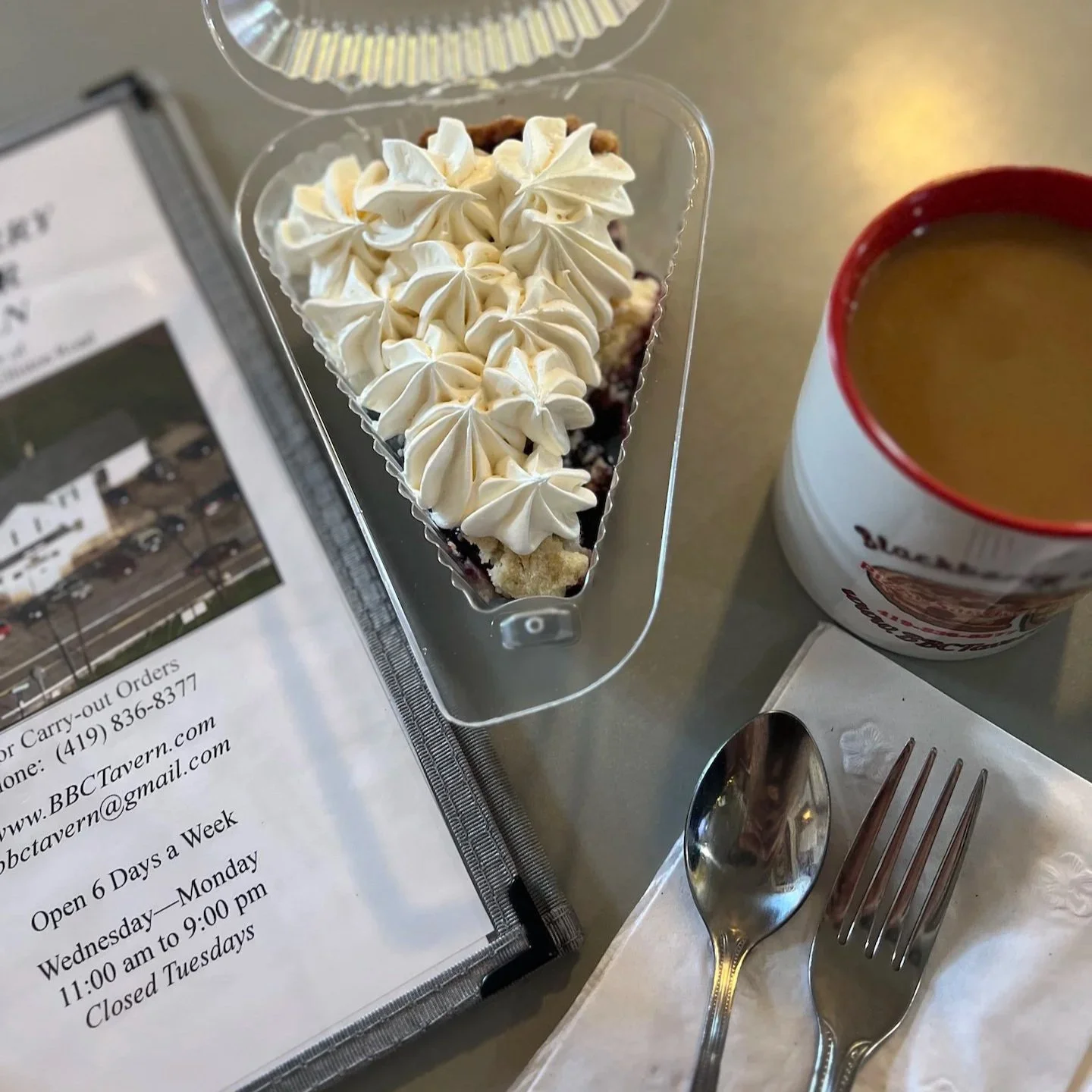
The slice of Lifer Pie. May 2026.
Sunday was my final day and wrapped with intentionally meeting two people in person: Jamie Cunningham, Education Director for BSBO who’d been instrumental in my invitation to and participation in the Biggest Week, and Joanna Wu, a scientist studying female birds, and a founding member of the female bird advocacy group The Galbatrosses. Joanna and I had connected earlier through a birding and outdoor recreation story I was working on, and she had come to the festival as a speaker over the same weekend as me. There is nothing like meeting people in person to confirm a connection, and I am committed to getting myself to more festivals and birding events like this to realize these working relationships in the same room.
So what is Birding Culture? As represented by this festival it is an effusive enthusiasm for observing wild birds with others who so identify as also enthusiastic, it’s an overt display of those identifying markers, and ultimately, birding culture brings money to a region in support of people in support of bird conservation.
What follows are a few more photos of residual evidence of birding culture across the festival. I hope they make you smile.
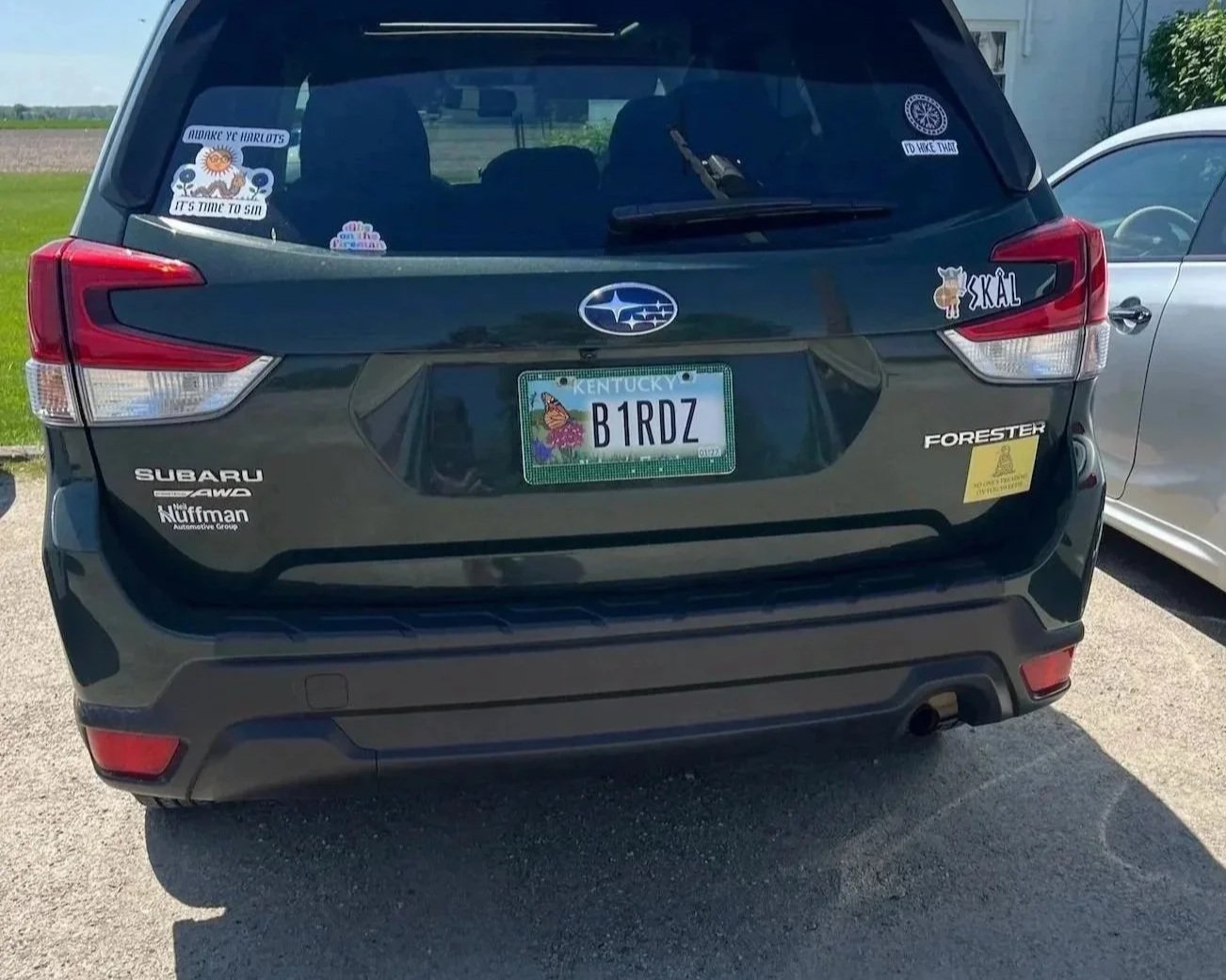
Vanity license plate outside Blackberry Corners Tavern, home of the obligatory “Lifer Pie” slice when you’ve had a good day of birding. May 2026.
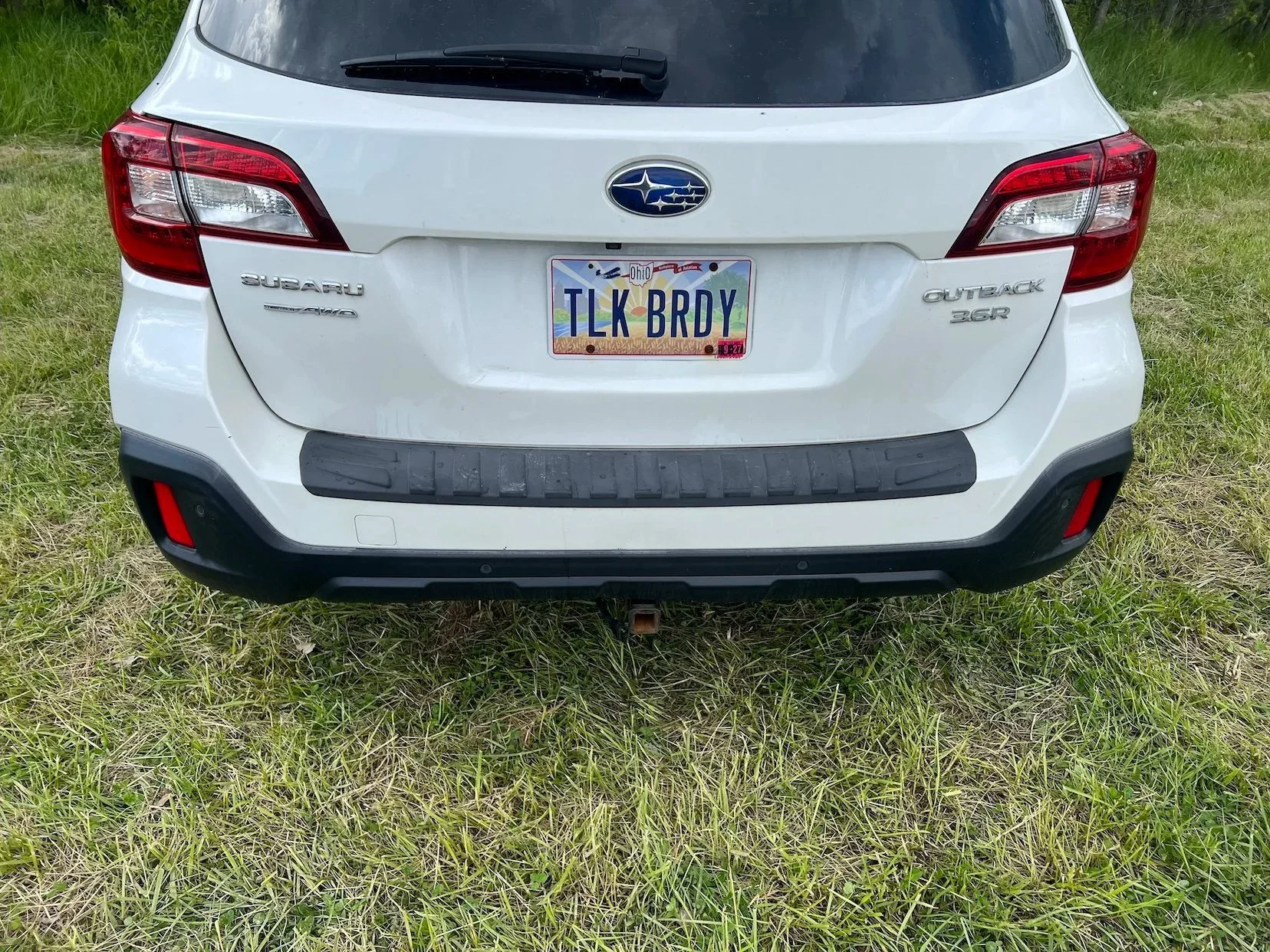
Vanity license plate in the Magee Marsh overflow parking area. May 2026.
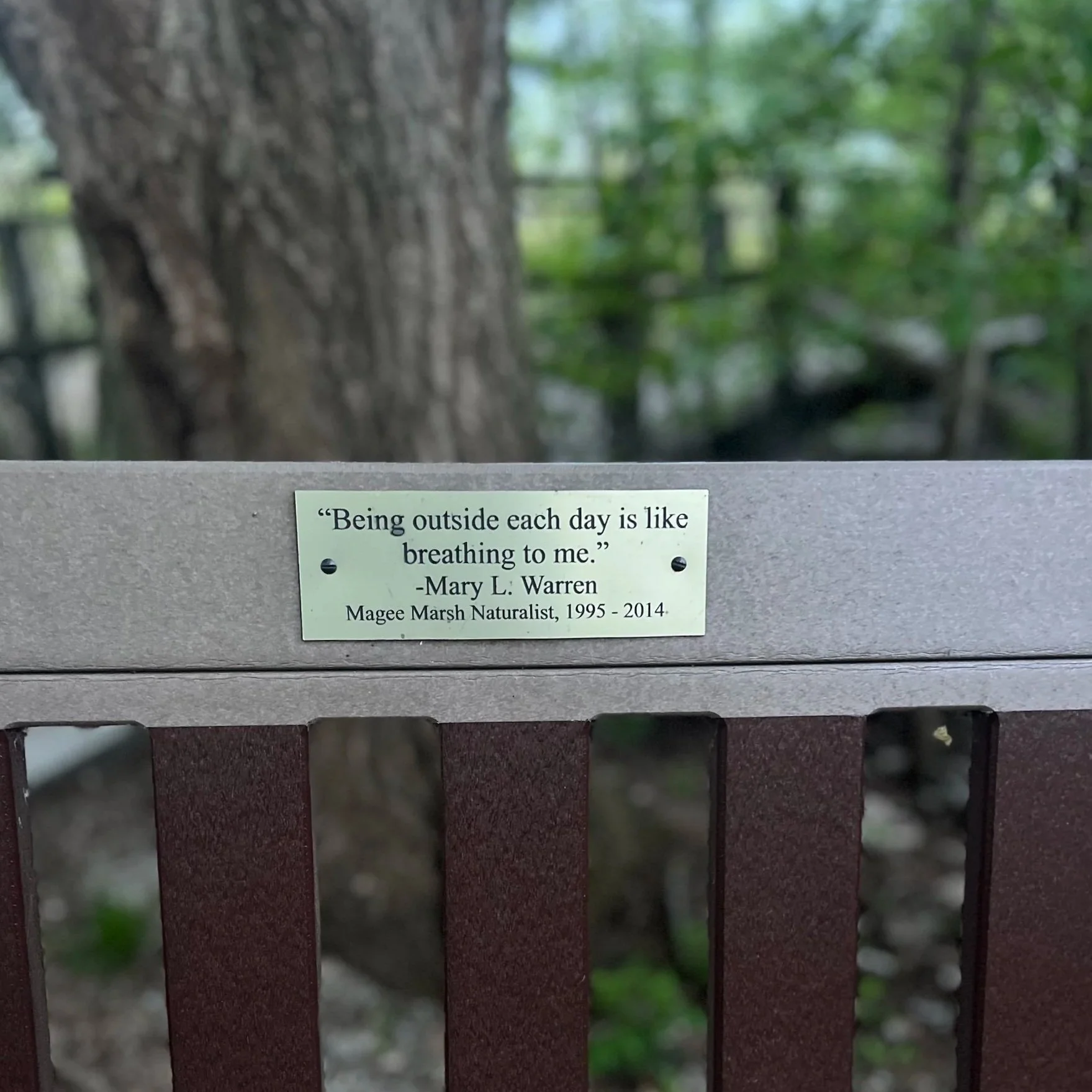
Dedicated bench, Magee Marsh. May 2026.
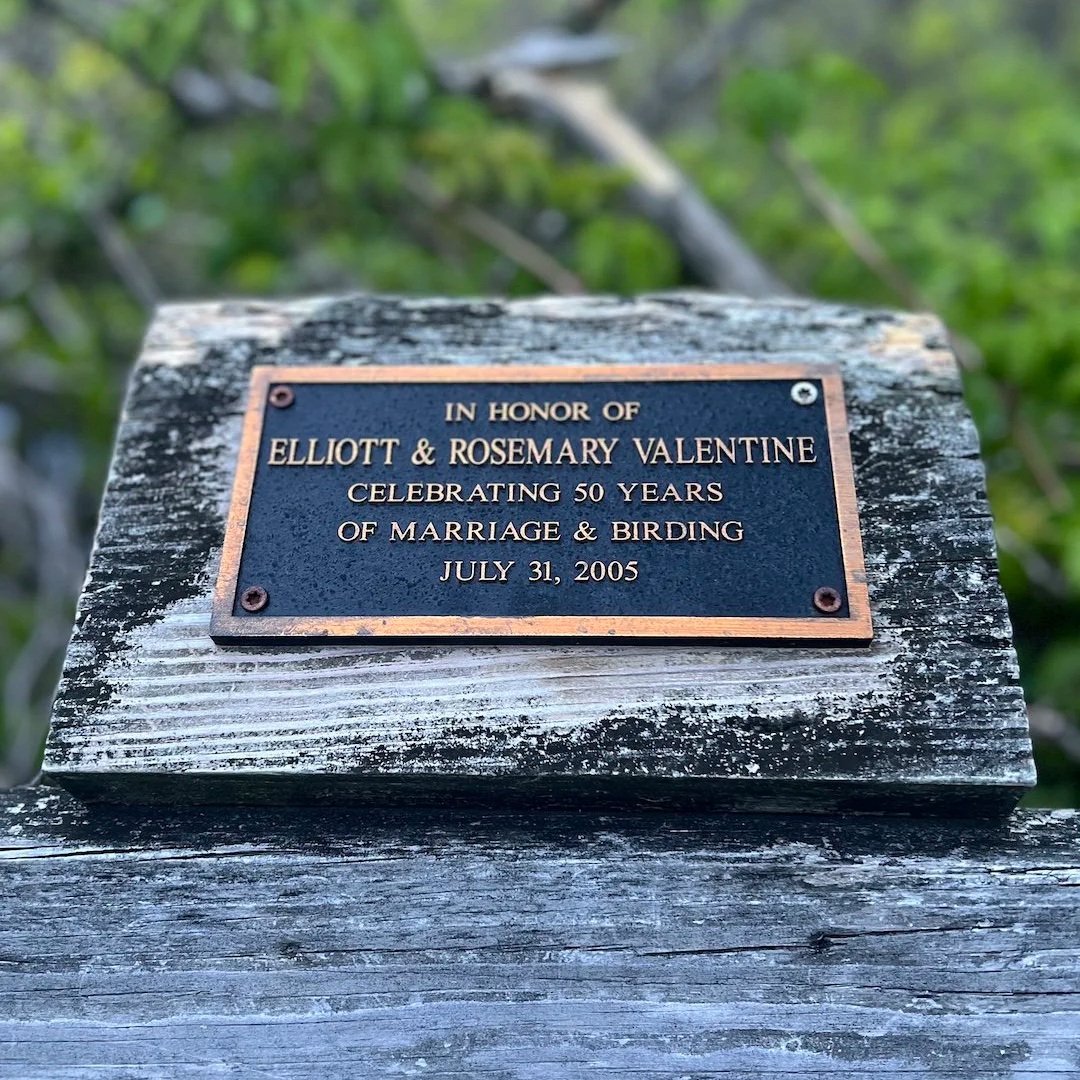
Another dedicated bench at the Magee Marsh, this one built into the boardwalk. May 2026.
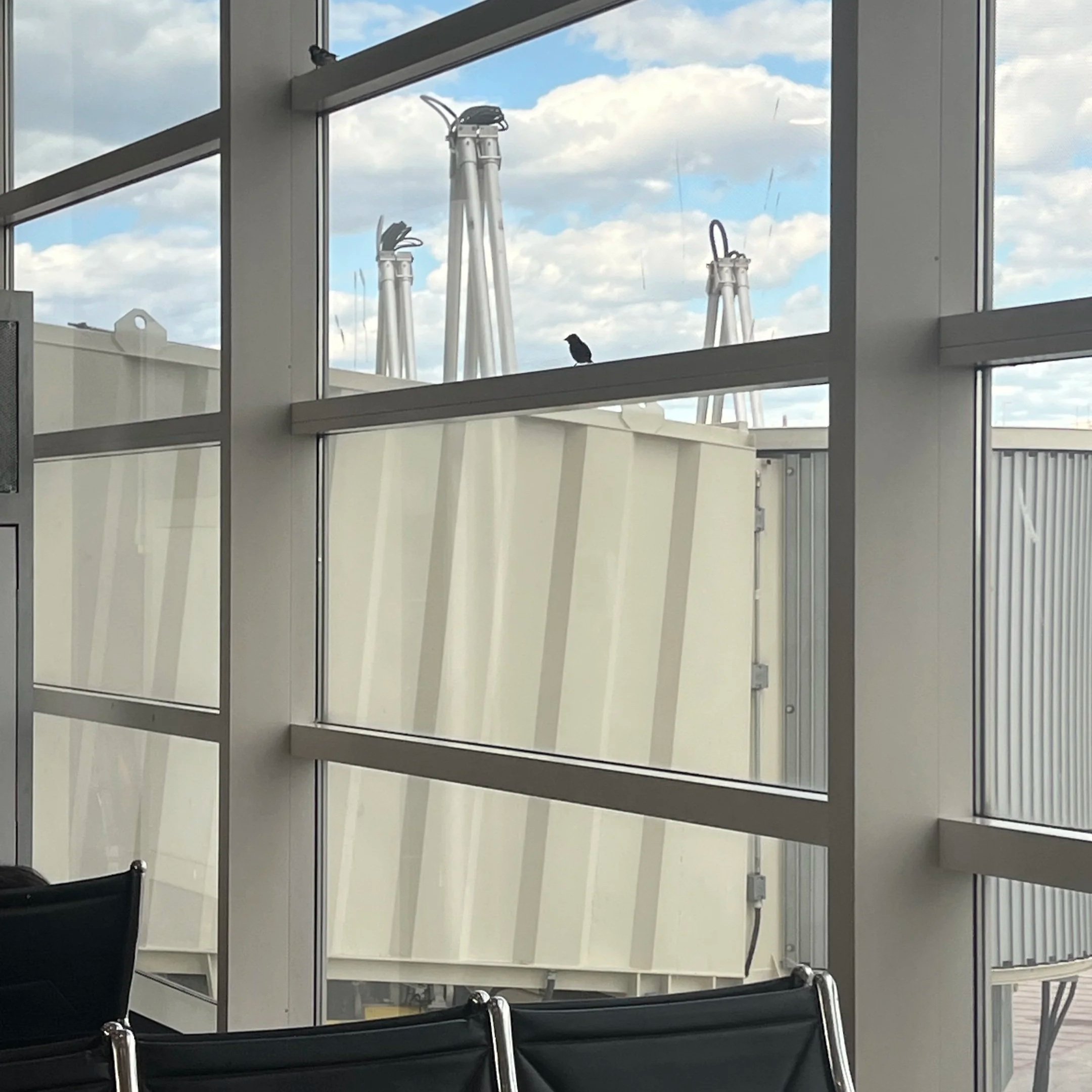
A pair of House Sparrows at the Delta terminal, Detroit Metro Airport, May 2026.
And finally, as I sat in the Detroit Metropolitan Airport terminal, who should I see but two House Sparrows, residents of the indoor space (at least temporarily), and appearing to be nest building! May they find a way out of that space in due time.
Thanks for reading! If you enjoy content about birding fairs and festivals, check out these stories about my visits to the Avistar Bird Fair in Brazil, and the Spring Cape May Birding Festival in Cape May, New Jersey.
For more stories about birding culture, peruse the library of past work on the topic!
And if you think others will enjoy this newsletter, please forward to a friend. Thanks!